Victor Vasarely
Hungary - 1906 - 1997
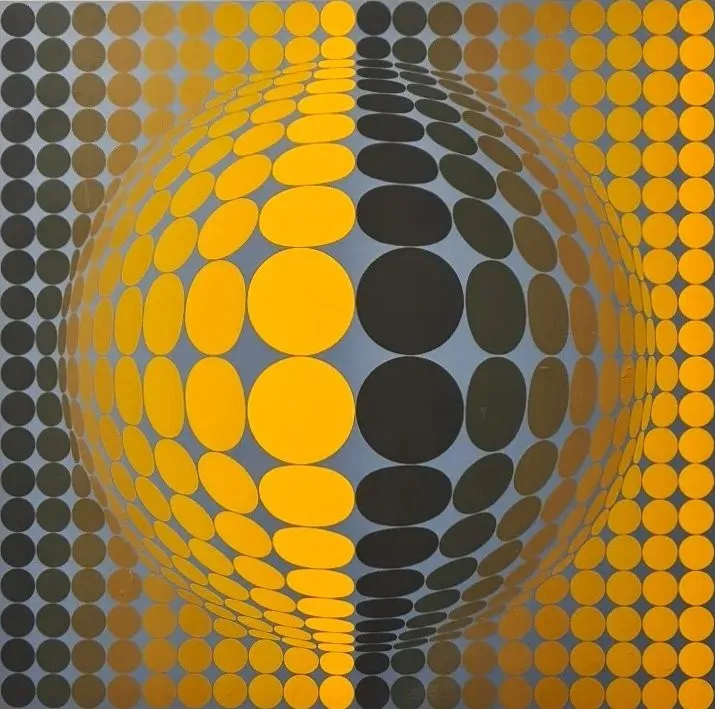
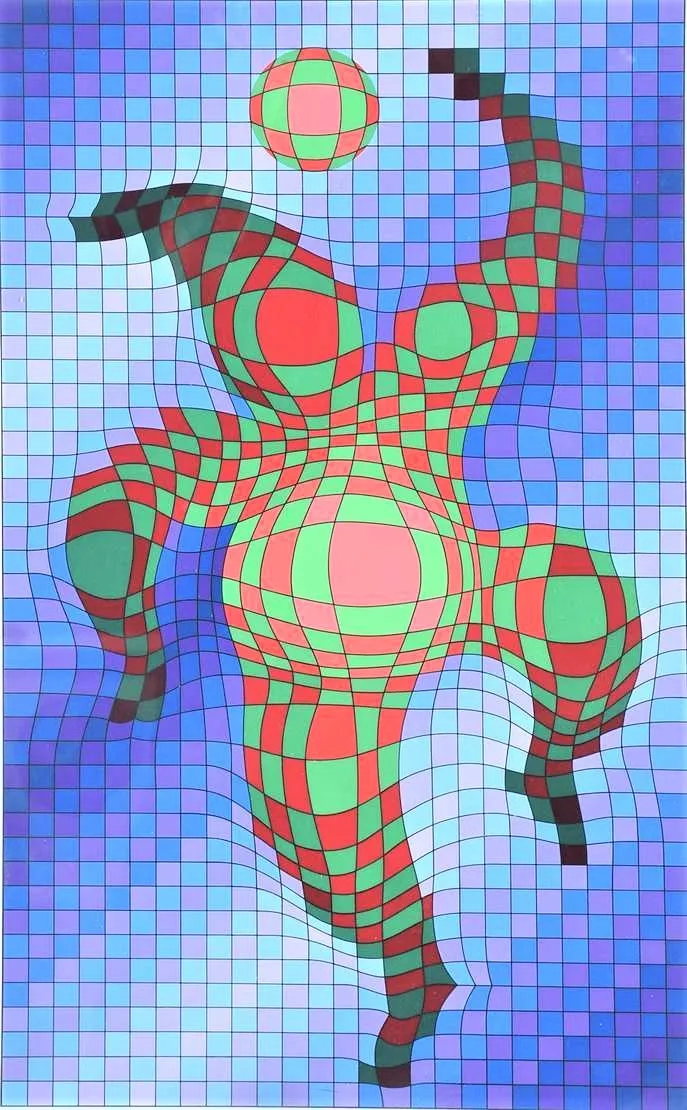
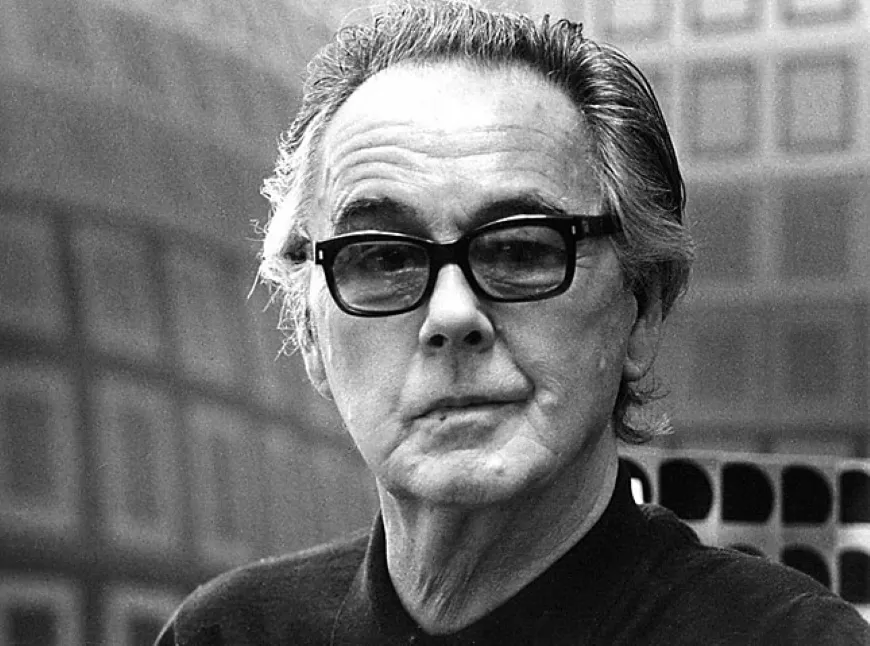
Victor Vasarely (Pécs, Hungary, April 9, 1906 – Paris, France, March 15, 1997) was a Hungarian-born painter and sculptor who became a naturalized French citizen and is widely recognized as the "father of Op Art" (Optical Art). His work, characterized by visual effects that explore perception and optical illusions, had a profound impact on 20th-century art.
Vasarely studied art in Budapest, where he was heavily influenced by the Bauhaus movement and the works of Paul Klee, Wassily Kandinsky, and Josef Albers. These influences led him to develop an artistic approach that emphasized the act of seeing as the true creator of the artwork, rather than the artwork itself. In 1930, he moved to Paris, where he worked as a graphic designer in advertising agencies, further refining his graphic style.
After an initial figurative phase, Vasarely chose to pursue a constructivist and geometric art, dedicating over a decade to the study of graphic patterns. Fascinated by lines and patterns, he began to explore undulating deformations and illusory depth through black and white linear grids. Over time, he introduced color into his compositions, adding greater dynamism and seeking to depict concepts such as galaxies, cosmic pulses, and cellular mutation.
Vasarely's works are defined by rigorous geometry, vibrant colors, and deep abstraction closely linked to scientific concepts, particularly optics. His contributions to Op Art reshaped the perception of art in the 20th century, standing out for creating visual effects that challenge the viewer's perception.
Sources:
Text: Blombô research and curation, with the support of artificial intelligence for content writing and structuring.
Check the selection of works of this artist