Victor Brecheret
Brazil - 1894 - 1955
Victor Brecheret (São Paulo, SP, 1894 - São Paulo, SP, 1955), born Vittorio Brecheret, was one of Brazil's most prominent sculptors of the 20th century. He began his artistic training in 1912, studying drawing, modeling, and wood carving at the Liceu de Artes e Ofícios in São Paulo. From 1913 to 1919, he furthered his studies in Rome under the tutelage of renowned sculptor Arturo Dazzi.
Upon returning to Brazil, Brecheret set up his studio at the Palácio das Indústrias in São Paulo, where he was discovered by modernist artists such as Di Cavalcanti, Hélios Seelinger, Menotti del Picchia, Mário de Andrade, and Oswald de Andrade, who helped promote his work. In 1921, Brecheret received a scholarship from the Pensionato Artístico do Estado de São Paulo and traveled to Paris, where he engaged with prominent sculptors such as Henry Moore, Emile Antoine Bourdelle, Aristide Maillol, and Constantin Brancusi.
Despite being in Europe, Brecheret participated in the 1922 Semana de Arte Moderna with 12 sculptures, solidifying his role as a leading figure in the Brazilian modernist movement. Among his most famous works is the Monumento às Bandeiras, begun in 1936 and inaugurated in 1953 in São Paulo, a landmark of Brazilian public sculpture.
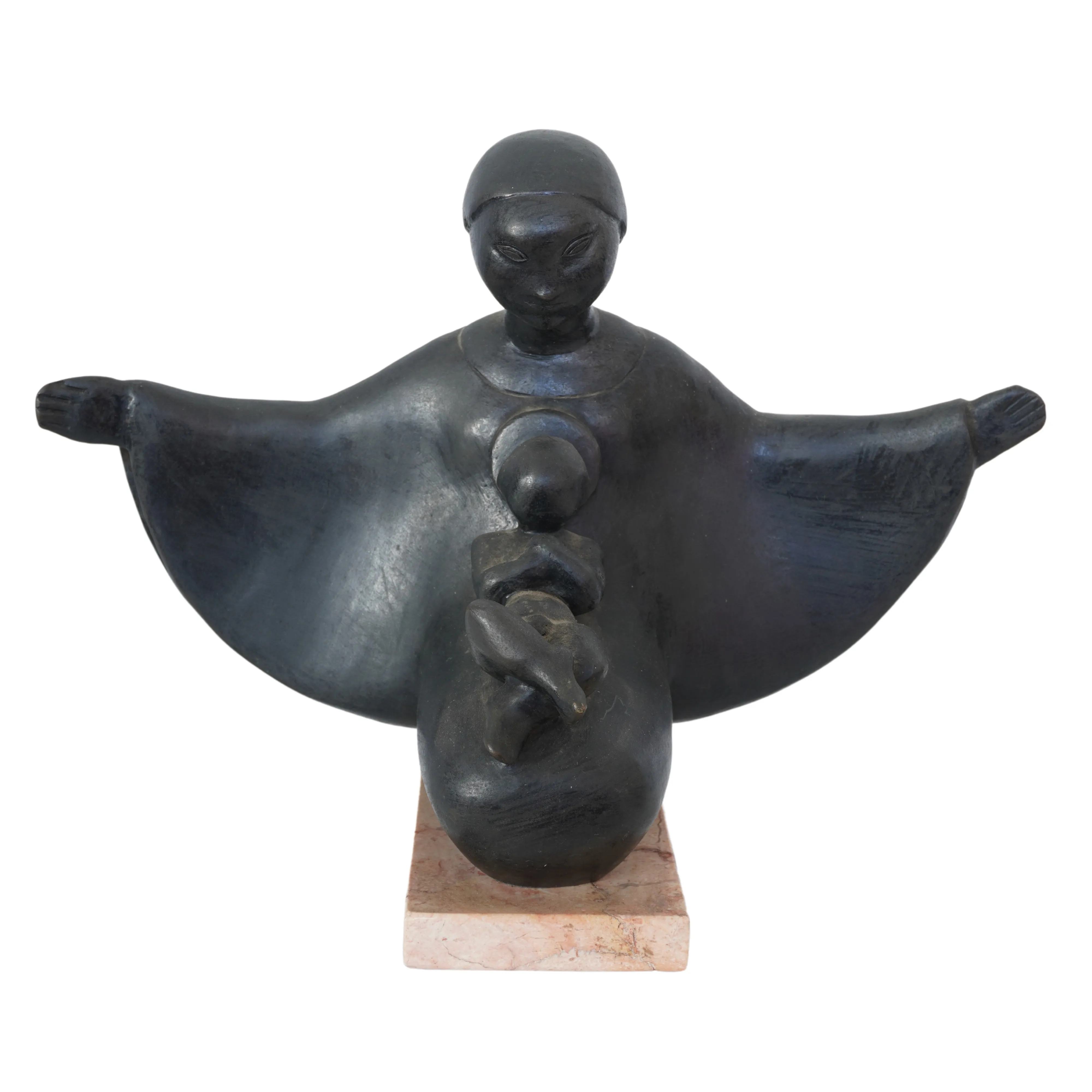
During the 1940s and 1950s, Brecheret focused on creating sculptures for public spaces, facades, and bas-reliefs, with a particular emphasis on works depicting Brazilian Indigenous culture in terracotta, bronze, and stone. Brecheret's style, characterized by monumental forms and formal synthesis, left an indelible mark on modern art in Brazil.
Sources:
Text: Blombô research and curation, with the support of artificial intelligence for content writing and structuring.
Check the selection of works of this artist