Rufino Tamayo
Mexico - 1899 - 1991
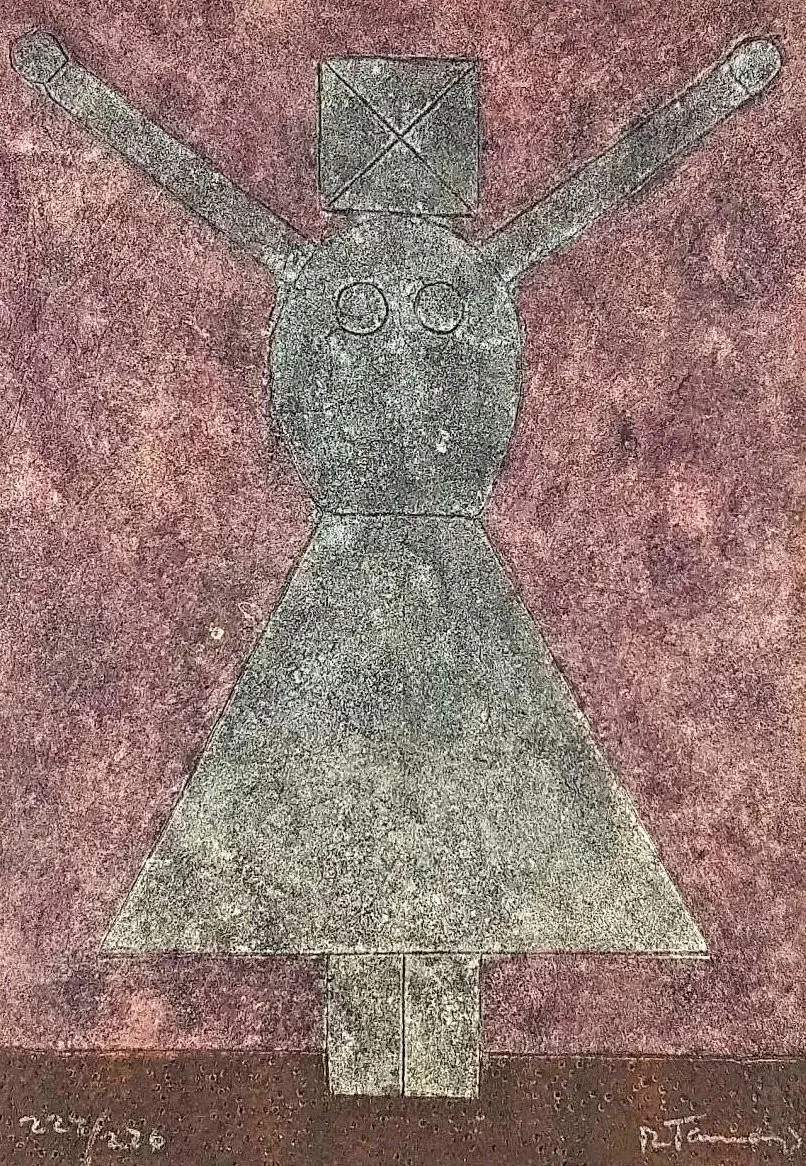
Rufino Tamayo, the son of Zapotec indigenous people, was born in the archaeological city of Oaxaca, in southern Mexico. As a young man, he moved to the Mexican capital, where he began his studies at the Escuela Nacional de Artes Plásticas San Carlos and held his first exhibition in 1926. Although contemporary with political muralists Diego Rivera, David Alfaro Siqueros, and Jose Clemente Orozco, Tamayo chose a different path, distancing himself from the so-called National Art that emerged after the 1910 Mexican Revolution. He developed a unique artistic language that masterfully integrated colors and textures.
Criticized by nationalists, Tamayo was forced to move to New York. He also lived in Paris for 14 years. In 1950, after being awarded at the Venice Biennale and having his work recognized in the Mexican art market, Tamayo was able to return to his country. Although Rivera and Frida Kahlo are more internationally known, it was Tamayo who laid the foundation for Contemporary Mexican Art, characterized by strong colors, abstraction, and "fantastic realism."
In Brazil, Tamayo received the Grand Prize at the São Paulo Biennale in 1953 and was honored at the 1977 Biennale with a room dedicated to his engravings, oils, and murals. He passed away in 1991, leaving a significant legacy, including the creation of two museums in Mexico, one of them in his hometown, to showcase his works.
Sources:
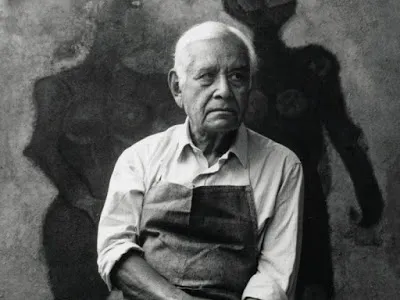
Photo: http://arteseanp.blogspot.com/2017/12/rufino-tamayo.html
Text: Blombô research and curation, with the support of artificial intelligence for content writing and structuring.
Check the selection of works of this artist