Renina Katz
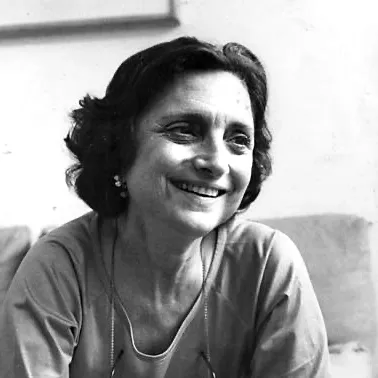
Renina Katz Pedreira, known as Regina Katz, was born in Rio de Janeiro in 1925. She is a renowned Brazilian printmaker, watercolorist, and illustrator. Along with Edith Behring and Fayga Ostrower, she is part of the generation of printmakers that art historian Geraldo Edson de Andrade calls the "matriarchy of printmaking in Brazil" .
Katz began her career in the 1940s, painting portraits and landscapes of Rio de Janeiro. In 1946, she started studying woodcut with Austrian printmaker Axl Leskoschek. From 1947 to 1950, she studied painting at the National School of Fine Arts in Rio de Janeiro and obtained a degree in drawing from the Faculty of Philosophy of the Federal University of Rio de Janeiro. Encouraged by artist Poty Lazzarotto, she studied metal engraving with Carlos Oswald at the School of Arts and Crafts in Rio de Janeiro.
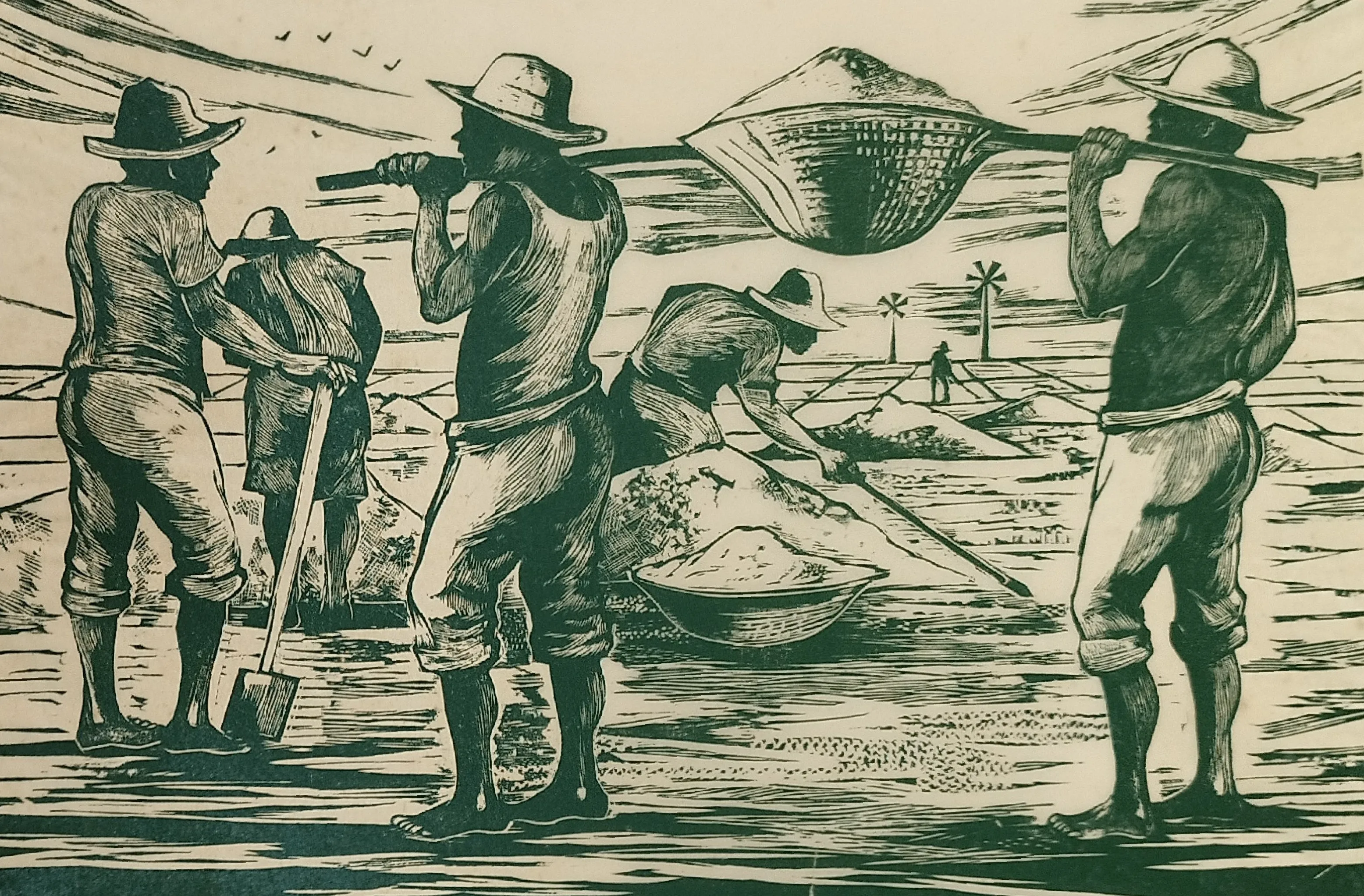
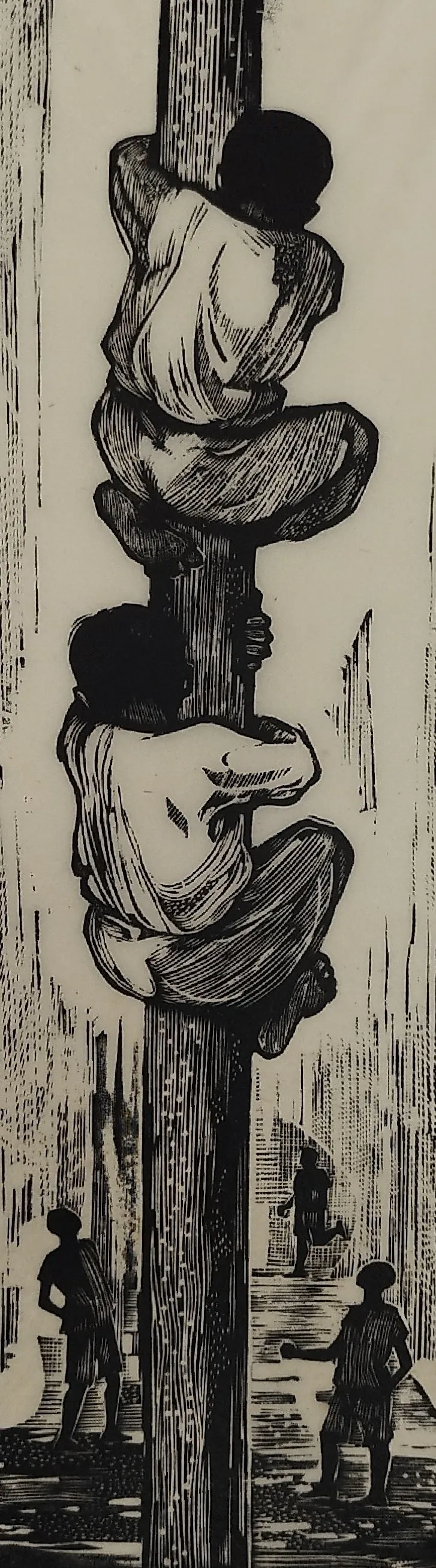
After moving to São Paulo in 1951, Katz taught painting and printmaking at the São Paulo Museum of Art from 1952 to 1955 and at the Armando Álvares Penteado Foundation from 1953 to 1963. During this period, she mainly focused on woodcut and linocut, producing figurative prints with strong social appeal in the style of social realism, depicting migrants, rural workers, and favela dwellers.
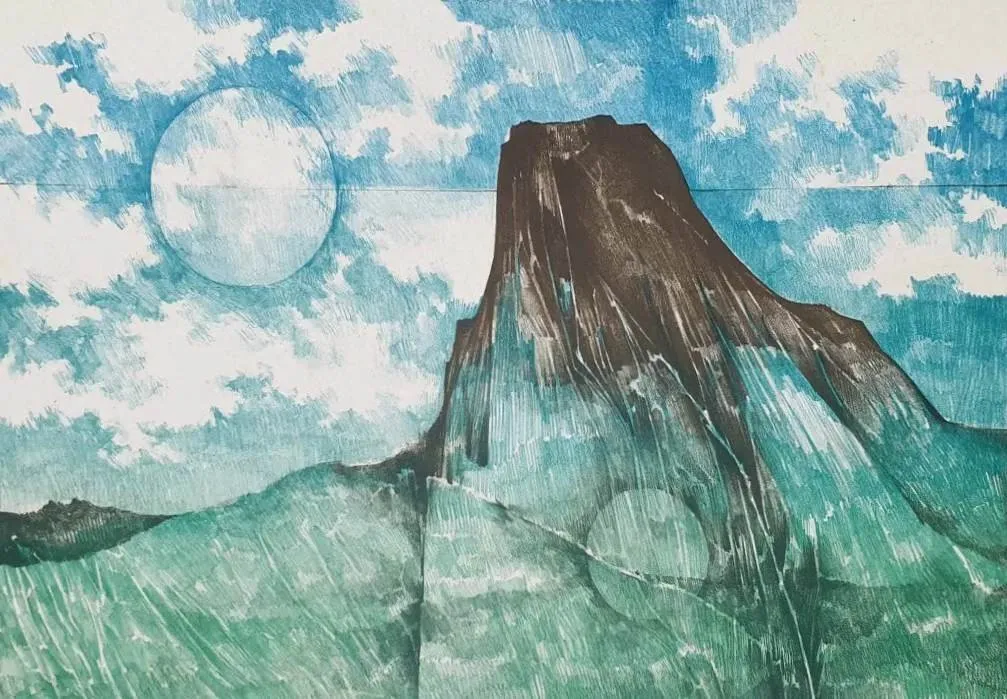
In the 1960s, Katz adopted a more abstract style, dedicating herself to painting and drawing and exploring color through screen printing. She engraved up to five matrices and applied up to eight different colors to achieve the desired effects. She stated: "Color emerged from the evolution of the work, and the multiplication of the matrices brought the possibility of exploring various tonal values." During the 1970s, she began working with lithography, which became her favorite medium.
In 1965, she became a professor at the Faculty of Architecture and Urbanism of the University of São Paulo (FAU/USP), where she obtained her master's and doctoral degrees. Her 1979 master's thesis was the first academic work at USP presented as a series of screen prints. Similarly, her 1982 doctoral thesis, composed of 13 lithographs, was the first non-verbal dissertation presented in the department.
Due to health issues, Katz had to abandon printmaking, focusing on watercolors. She explained: "Since printmaking requires physical strength, over time it became increasingly difficult to work with it."
Sources:
Text: Blombô research and curation, with the support of artificial intelligence for content writing and structuring.
Check the selection of works of this artist