Paolo Rissone
Italy
Paolo Rissone was an Italian painter who played a significant role in the Brazilian modern art scene during the 1950s and 1960s. Born in 1925, Rissone brought with him a wealth of European techniques and influences, which uniquely merged with Brazil's vibrant artistic environment of the time.
Artistic Trajectory
Rissone began his career in Italy, where he developed a solid foundation in painting techniques and absorbed the influences of European art movements. In the 1950s, he moved to Brazil, where he found a fertile ground for artistic innovation and experimentation. The vibrant Brazilian cultural scene provided Rissone with new perspectives and challenges, which he incorporated into his work.
Contributions and Influences
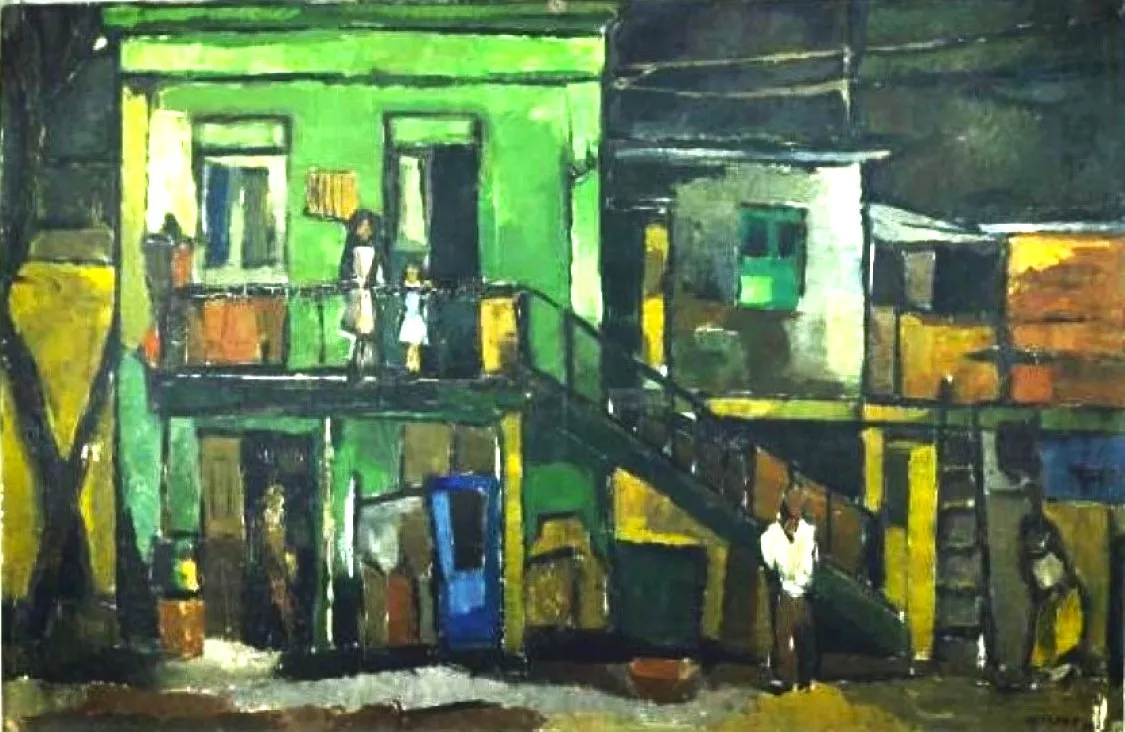
During his time in Brazil, Rissone stood out for integrating elements of European modern art with Brazil's rich and diverse visual culture. His work is characterized by the expressive use of colors and shapes, reflecting both the influence of European masters and the inspiration from Brazil's landscapes and everyday life.
Exhibitions and Recognition
Rissone participated in several important exhibitions in both Brazil and Italy, solidifying his reputation as an innovative and versatile artist. His works were displayed in prestigious galleries and biennials, receiving praise from both critics and the public.
Legacy and Impact
Paolo Rissone's legacy is notable for how he managed to create a bridge between European artistic traditions and the emerging modernity of Brazil. His influence can be seen in the work of many Brazilian artists who sought to integrate international techniques and styles into their own practices. Rissone left an indelible mark on Brazilian modern art, contributing to the development of a unique and recognizable style.
Sources:
Text: Blombô research and curation, with the support of artificial intelligence for content writing and structuring.
Check the selection of works of this artist