Niobe Xandó
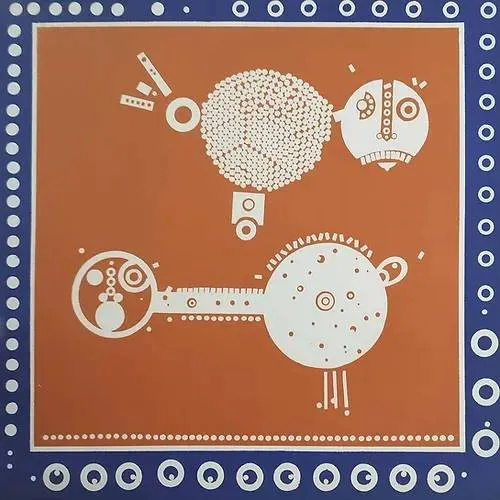
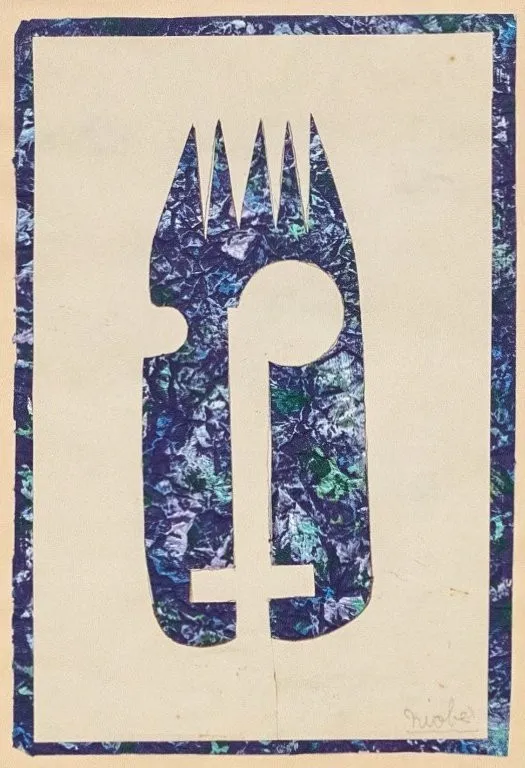
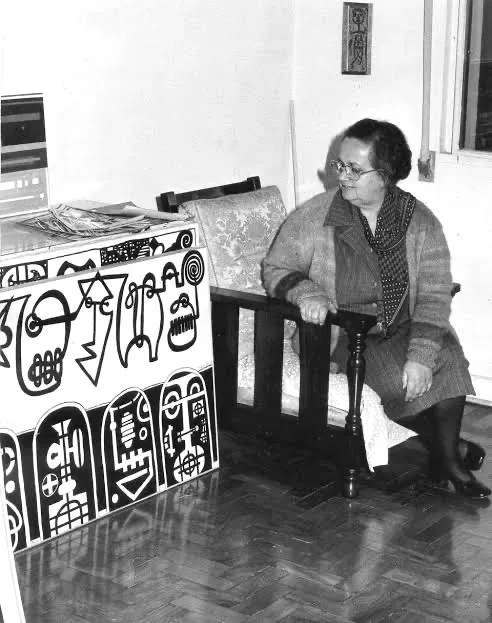
Niobe Nogueira Xandó Bloch (Campos Novos do Paranapanema, now Campos Novos Paulista, 1915 — São Paulo, February 19, 2010) was a self-taught Brazilian painter, draughtswoman, and writer. Her work integrated elements from diverse artistic traditions such as Dadaism, Concrete art, Pop art, new figuration, Art Brut, and Lettrism. From the 1950s to the 1990s, she developed one of the most unique artistic productions in Brazil.
Biography and Artistic Trajectory
Niobe grew up in the interior of São Paulo and moved to the capital in 1932, where she married João Baptista Ribeiro Costa, a prominent communist militant, at the age of 16. Boldly, she began attending meetings of the Brazilian Communist Party (PCB).
She started her artistic career in 1947 in New York. That same year, she forged relationships with Yoshiya Takaoka and Geraldo de Barros in the studio of professor and artist Raphael Galvez. Her first solo exhibition took place in São Paulo, at Livraria das Bandeiras, Praça da República, in 1953. After separating, she married Czech intellectual Alexandre Bloch, forming a friendship with critic Vilém Flusser, who followed her artistic process and wrote articles promoting and analyzing her work.
Niobe Xandó's work began to receive greater attention from 1965, with an exhibition at the 8th São Paulo International Biennial. She was later featured in the special room of Magic, Fantastic, and Surrealist Arts at the 10th São Paulo International Biennial in 1969. In 1978, during the 1st Latin American Biennial of São Paulo, her influence from African and indigenous cultures became evident. In the 1970s, Flusser noted the limited impact of her production on the national scene and concluded that if Brazilian critics assumed "the dual role of analysis and audience preparation, Niobe Xandó would have long been a catalyst for Brazilian artistic production."
Style and Influences
Niobe's work is multifaceted, exploring various lines of research throughout her career. In the 1950s, she began with figurativism inspired by Paul Gauguin, Edvard Munch, and Marc Chagall, moving on to abstractionism and the representation of totems and archaic masks in the 1960s. In the 1970s, she adopted Lettrism and later developed Mechanicism, a term she coined to describe the confrontation between archaism and modernity.
From the 1950s to the 1990s, Niobe Xandó developed one of the most unique artistic productions in the country, utilizing a sophisticated repertoire that articulated questions from the most distinct artistic traditions. As Marcelo Mattos Araújo, director of the Pinacoteca do Estado de São Paulo, wrote, her work "developed one of the most unique productions in our country, utilizing a sophisticated repertoire that articulates questions from the most distinct artistic traditions."
Sources:
Text: Blombô research and curation, with the support of artificial intelligence for content writing and structuring.
Check the selection of works of this artist