Mauricio Nogueira Lima
Brazil - 1930 - 1999
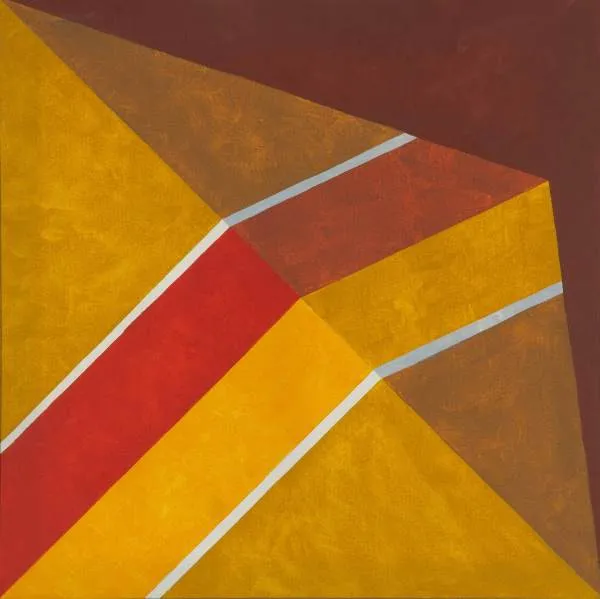
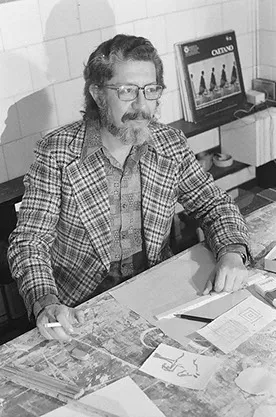
Born in 1930, Maurício Nogueira Lima was the youngest member of the Grupo Ruptura, which brought together geometric abstract artists in São Paulo in the early 1950s. Alongside Waldemar Cordeiro, Geraldo de Barros, and Luis Sacilotto, Nogueira Lima developed a solid career as a concrete artist, exhibiting his geometric paintings at the 3rd, 4th, and 6th São Paulo Biennials. With this body of work, he was invited by the Swiss artist Max Bill to take part in the celebrated exhibition Konkrete Kunst (Concrete Art), held in Zurich in 1960.
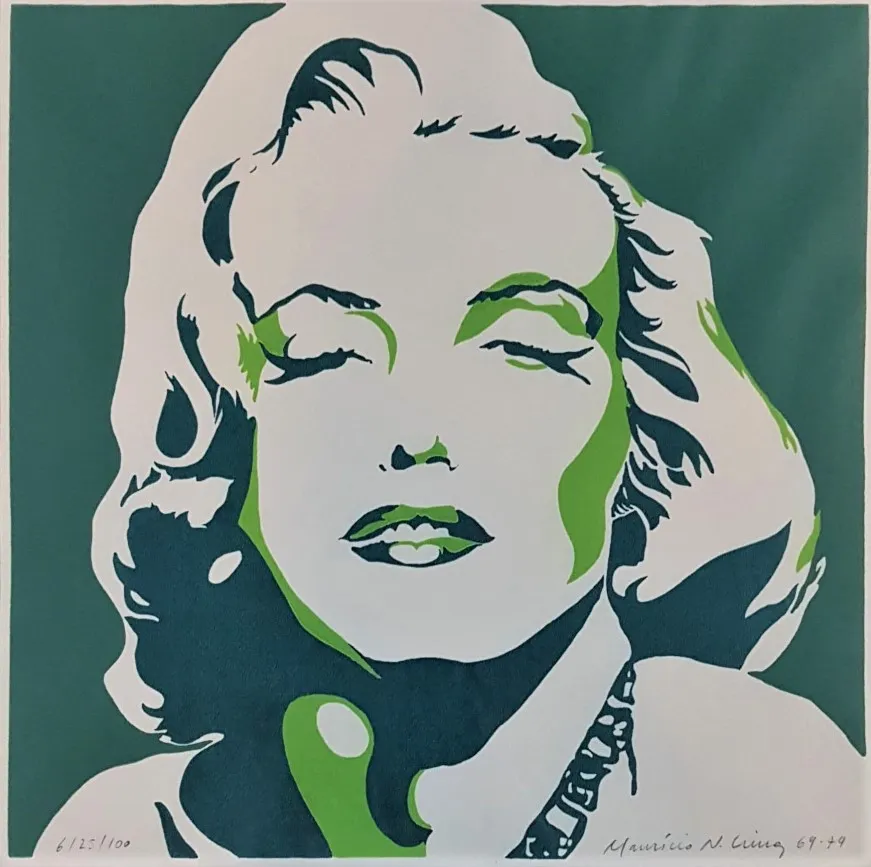
Like other artists from Grupo Ruptura, Nogueira Lima turned to figuration shortly after the 1964 military coup. During this period, he appropriated images from mass media to construct works of strong visual impact: film, soccer, and pop music icons became central figures in his paintings, alongside graphic signs and onomatopoeias that subtly denounced the violence imposed by the new regime. In 1967, he contributed to the organization of the legendary exhibition Nova Objetividade Brasileira (New Brazilian Objectivity), held at MAM-Rio, and co-signed the collective manifesto Declaration of Basic Principles of the New Vanguard.
In 1973, he returned to geometric abstraction, but with greater formal freedom. He became interested in textures, brushstroke effects, and the behavior of acrylic paint. He created illusions of volume through chromatic vibrations and, from these studies, carried out a series of urban interventions in São Paulo, in locations such as Praça Roosevelt and the Minhocão. In the 1990s, he pioneered chromatic interventions with nighttime projections at the Arcos da Lapa in Rio de Janeiro and at the Pacaembu Municipal Stadium in São Paulo.
Alongside his artistic production, Nogueira Lima also designed posters, logos, and architectural projects for major companies and events, such as FENIT (International Textile Industry Fair) and UD (Household Utilities Fair). He won the poster competitions of the 1st and 6th São Paulo Salon of Modern Art (in 1951 and 1957, respectively) and, in the 1980s, created panels for the Santana and São Bento stations of the São Paulo subway system.
Sources:
Text: Regina Teixeira de Barros
Check the selection of works of this artist