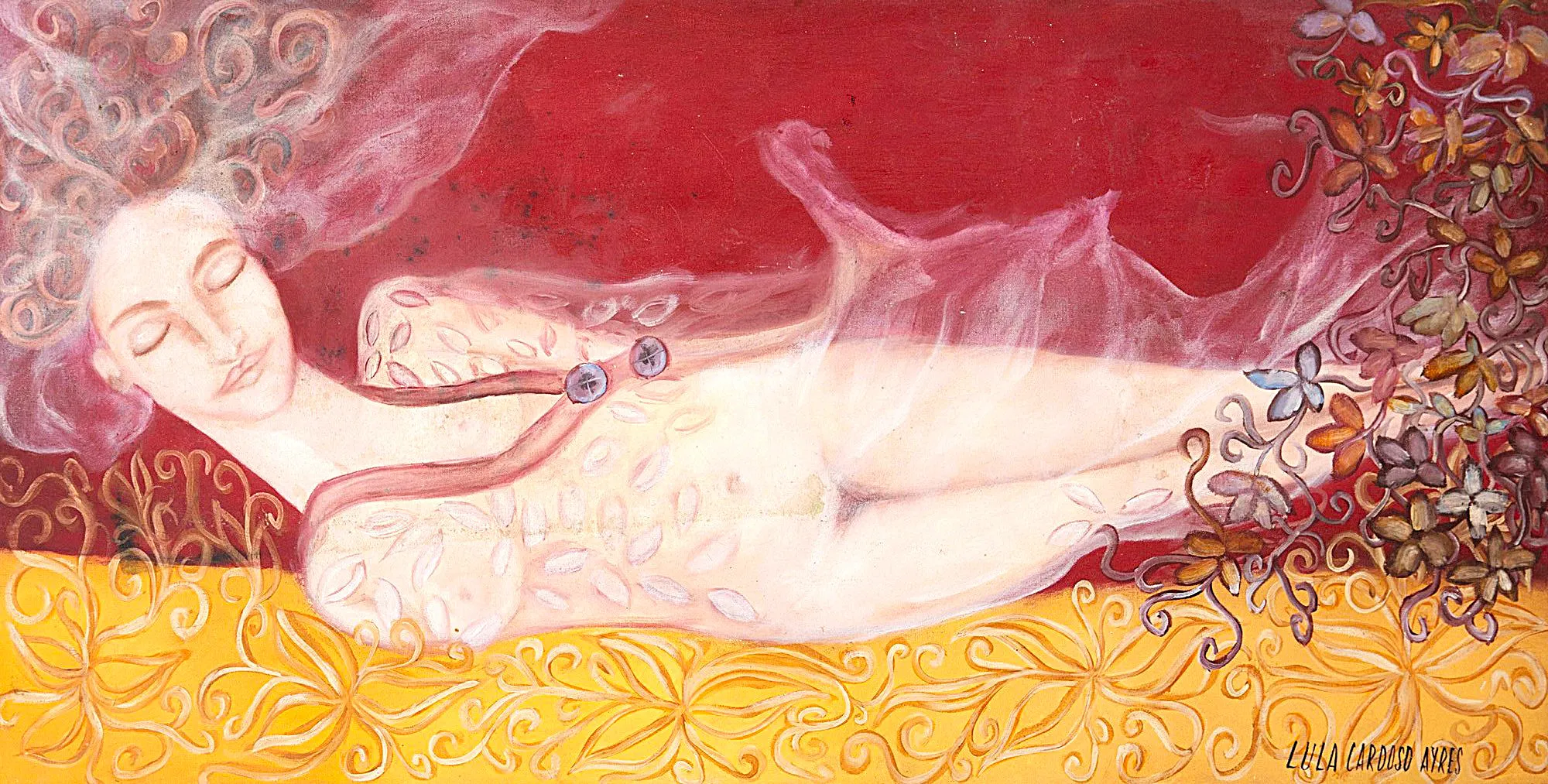

Lula Cardoso Ayres
Painter, photographer, draftsman, illustrator, muralist, and set designer.
Luiz Gonzaga Cardoso Ayres began his artistic training at an early age, studying drawing and painting with Heinrich Moser between 1922 and 1924. In 1925, he traveled to Paris, where he visited the International Exhibition of Decorative Arts and engaged with museums, studios, and artists such as Maurice Denis, coming into close contact with modern European artistic movements. He returned to Brazil the following year and established a studio in the Laranjeiras neighborhood of Rio de Janeiro. During this period, he attended the National School of Fine Arts informally, studied life drawing with Rodolfo Amoedo, worked in Carlos Chambelland’s studio, and developed a close friendship with Candido Portinari. Professionally, he worked as a theatrical set designer and contributed illustrations and caricatures to the magazine Para Todos.
In late 1932, he returned to Pernambuco to assist in managing his family’s sugar mill and lived in Cucaú, in the countryside, until 1944. During these years, he traveled through small towns in the region, closely observing local customs, festivals, and popular artistic expressions. This experience resulted in numerous drawings and an extensive photographic body of work. He developed a particular interest in Northeastern popular ceramics, whose forms and symbolism he incorporated into his paintings and watercolors. In 1934, at the First Afro-Brazilian Congress in Recife, he established lasting intellectual ties with figures such as Cícero Dias, Ulysses Pernambucano, and Gilberto Freyre.
Following the family’s financial crisis in the mid-1940s, Lula Cardoso Ayres settled once again in Recife and focused fully on his artistic career. He produced murals and panels in several Brazilian cities, most notably the large-scale mural for Recife’s Guararapes Airport, depicting everyday life, festivities, and Northeastern popular culture. He also illustrated literary works by authors including Manuel Bandeira and Ascenso Ferreira. In 1947, he founded a drawing course for children and later taught at the School of Fine Arts of the Federal University of Pernambuco (UFPE).
In the early 1950s, his work shifted toward abstraction, a phase during which he participated in the first three São Paulo Biennials between 1951 and 1955. In 1960, his career was the subject of a major retrospective exhibition at the São Paulo Museum of Art Assis Chateaubriand (MASP), organized by Pietro Maria Bardi, highlighting his more recent production. From the mid-1960s onward, he returned to figuration, creating works featuring female figures, animals, and fantastical beings. In 1984, he completed mural projects for the Recife subway system. After his death, he was honored by the Association of Professional Visual Artists of Recife, reaffirming his significance in the development of modern art in Pernambuco.
Sources:
Text: Blombô research and curation, with the support of artificial intelligence for content writing and structuring.
Check the selection of works of this artist