
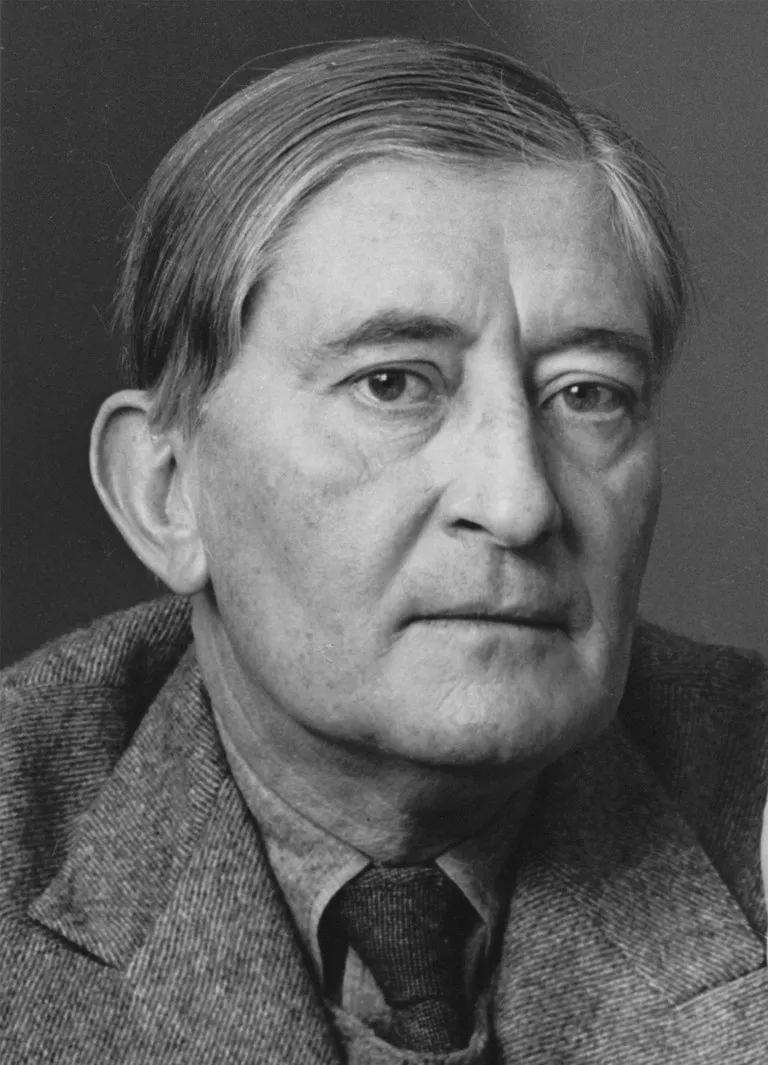
Josef Albers
GermanyJosef Albers (1888-1976) was born in Bottrop, Germany, and studied in Berlin, Essen, and Munich before joining the Bauhaus in 1923. Quickly rising to prominence, he was invited by the school's founder, Walter Gropius, to become a faculty member. With the rise of Nazism, Albers emigrated to the United States, where he became a professor at Black Mountain College in North Carolina. He became a U.S. citizen in 1939. In 1950, he moved to Yale University, where he taught until his retirement. Albers established the Josef and Anni Albers Foundation, which promotes his works and supports artistic research. He was elected a member of the American Academy of Arts and Sciences. His work, especially the series "Homage to the Square," deeply explores color and spatial perception. Albers participated in Documenta in Kassel and had retrospectives at MoMA and the Metropolitan Museum of Art in New York, becoming the first living artist to be so honored at the latter. Albers died in New Haven, and his work is still represented by the Barbara Krakow Gallery.
Sources:
Text: Blombô research and curation, with the support of artificial intelligence for content writing and structuring.
Check the selection of works of this artist

