
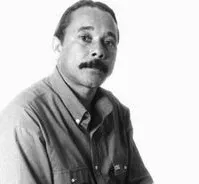
José De Dome
Brazil - 1921 - 1982
José de Dome, an artistic name derived from his mother's name, Dometila, was born in 1921 in Brazil. He started his professional life in the same factory where his mother and grandmother, Maria Pastora, worked as weavers in 1935. Five years later, he moved to Massaranduba in Salvador, where he met influential artists like Mario Cravo, Mirabeau, and Carybé, who encouraged him to explore his artistic talents. During this time, he worked in various jobs including mason's helper and night watchman.
In 1943, José discovered his passion for painting after receiving a book on painting techniques. Inspired by the book, he painted his first work, "Little Church of Massaranduba". His artistic career took off with an exhibition at the Belvedere da Sé in Salvador in 1955, and he repeated the feat in the following two years.
Having established himself as a painter, he moved to Rio de Janeiro in 1962, where he quickly integrated into the local art scene. His fame grew following an exhibition at the Goeldi Gallery in 1964. José de Dome captured on his canvases the urban landscape of Salvador, as well as varied themes such as children, prostitutes, animals, and natural landscapes.
Over four decades, José held more than a hundred exhibitions, both in Brazil and internationally, including shows in Madrid, Lima, Portugal, England, the United States, Mexico, France, and Nigeria. He was known for a direct approach in his art, as expressed in his own words remembered by professor and journalist Gilfrancisco: "All my works that are thought to be unfinished don't need more because that's how I want to show the impression that touched me, the message that figure gave me. If I keep elaborating, they lose. That's why I don't make figures like the drawing. And the colors to say things, they have to come out directly."
Sources:
Text: Blombô research and curation, with the support of artificial intelligence for content writing and structuring.
Check the selection of works of this artist

