
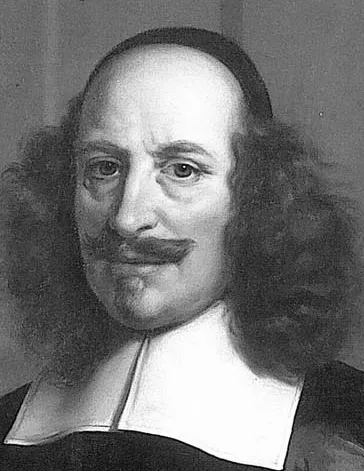
Johannes Blaeu
Johannes Blaeu, born in 1596 in Alkmaar and died in 1673 in Amsterdam, was a distinguished Dutch cartographer and the son of Willem Blaeu. After earning his doctorate in Law in 1620, Blaeu chose to follow his father's career in cartography rather than practicing law. In 1635, he and his father published the two-volume "Novus Atlas," also known as "Theatrum orbis terrarum, sive, Atlas novus." After his father's death in 1638, Johannes and his brother Cornelius took over the family business.
In 1643, the Blaeu brothers published the wall map "Brasília qua parte paret Belgis," notable for its detailed representation of the Brazilian coasts, featuring vignettes by Frans Post and based on Georg Marcgraf's studies. With Cornelius' death in 1648, Johannes became the official cartographer for the Dutch East India Company.
Johannes also published "Tooneel der Steeden" (Theatre of Cities) in 1649, a collection of maps of Dutch cities. Elected to the Amsterdam council in 1651, he continued to expand his cartographic work with the publication of the first atlas of Scotland in 1654. In 1662, he released the "Atlas Maior," a comprehensive world atlas in 11 volumes, available in Dutch, Latin, French, German, and Spanish, with the number of volumes varying between nine and twelve depending on the language.
His last project, a work on cosmology, was never completed due to a devastating fire that destroyed his printing press in 1672.
Sources:
Text: Blombô research and curation, with the support of artificial intelligence for content writing and structuring.
Check the selection of works of this artist

