Ione Saldanha
Ione Saldanha (Alegrete, Rio Grande do Sul, 1919 – Rio de Janeiro, 2001) was a Brazilian painter, sculptor, and draughtswoman whose career was distinguished by an ongoing exploration of color, geometry, and the expansion of painting beyond traditional supports.
Based in Rio de Janeiro, Saldanha began her artistic training in 1948 at the studio of painter Pedro Luiz Correia de Araújo. During this period, she also came into contact with artists such as Arpad Szenes and Maria Helena Vieira da Silva. In 1951, she traveled to Europe, where she furthered her studies of fresco painting, attending the Académie Julian in Paris and continuing her artistic education in Florence, Italy.
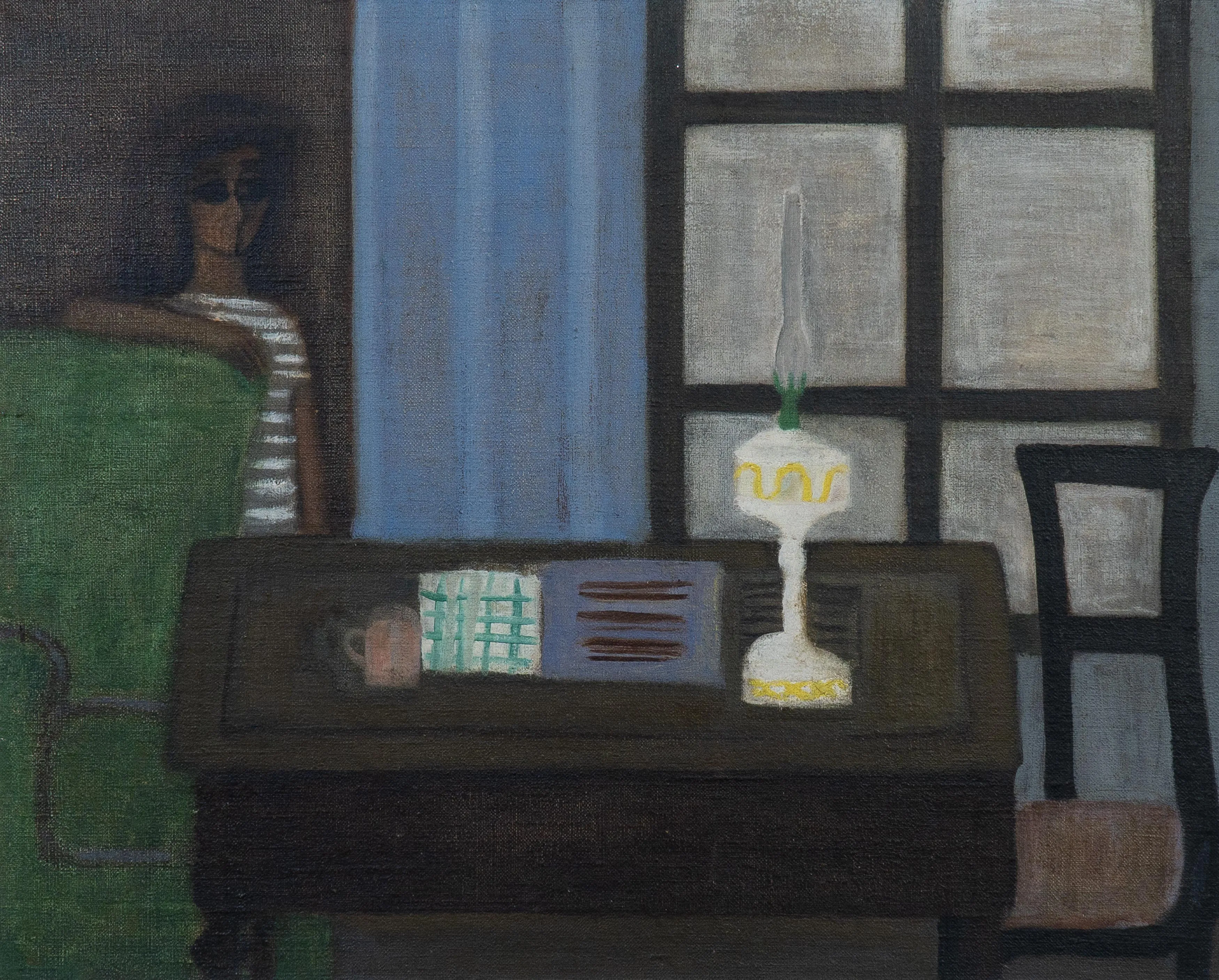
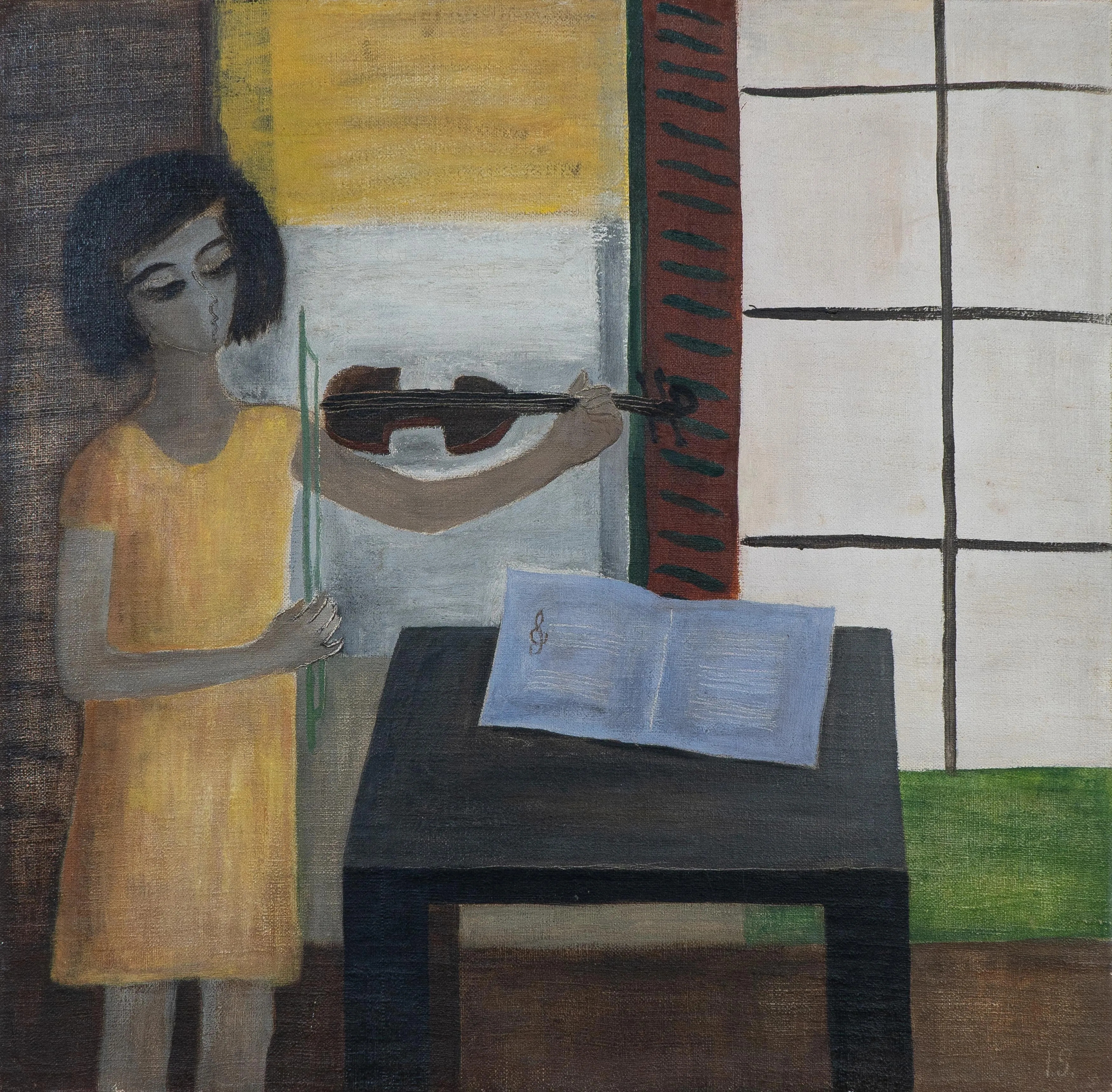
Her early work was primarily figurative, encompassing portraits, scenes of everyday life, façades, and urban architecture. Over time, these subjects underwent an increasing process of formal simplification. Geometry, verticality, and, above all, the organization of color gradually assumed a central role in her compositions, leading her practice toward abstraction. This transition developed progressively, establishing color as one of the defining elements of her artistic language.
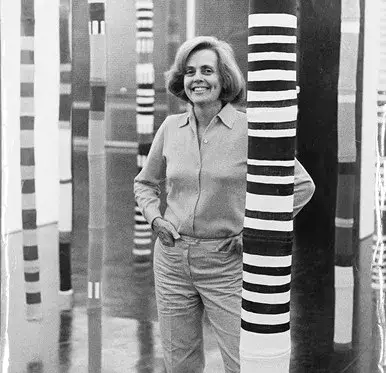
By the late 1960s, Saldanha introduced a decisive transformation into her practice. Painting was no longer confined to the conventional surface of the canvas and began to occupy physical space through unconventional supports. Wooden slats, bamboo poles, cable reels, and, later, stacked wooden elements became surfaces for her chromatic compositions, bringing painting, object, and sculpture into close dialogue. These experiments would become among the most distinctive aspects of her body of work.
Throughout nearly six decades of artistic activity, Ione Saldanha developed a singular position within twentieth-century Brazilian art. She participated in several editions of the São Paulo International Biennial, receiving an acquisition award in 1967 and later being honored with special rooms dedicated to her work. In 1969, she received the international travel prize at the 7th Resumo de Arte, organized by Jornal do Brasil, which enabled her to travel throughout the United States and Europe.
Her career has been revisited through a number of significant retrospective exhibitions. In 1988, her work was featured in Resumo de 45 Anos de Pintura, presented simultaneously at the Anna Maria Niemeyer, Paulo Klabin, and Saramenha galleries in Rio de Janeiro. In 1996, an exhibition dedicated to her work was held at the Paço Imperial. In 2001, the year of her death, the Museu de Arte Contemporânea de Niterói presented the retrospective Ione Saldanha e a Simplicidade da Cor. More recently, her historical importance was reaffirmed by MASP with the exhibition Ione Saldanha: A Cidade Inventada, held between 2021 and 2022.
Today, Ione Saldanha is recognized for her distinctive contribution to the development of painting in Brazil, particularly through the way she brought together color, geometric structure, and spatial relationships. By extending pictorial language beyond the two-dimensional surface and onto objects that directly engage with their surroundings, she established a body of work of lasting importance. Her works are held in major Brazilian museum collections, and her practice remains significant to the understanding of abstraction and Constructivist developments in Brazilian art.
Sources:
Text: Blombô research and curation, with the support of artificial intelligence for content writing and structuring.
Check the selection of works of this artist