Flávio De Carvalho
Flávio Resende de Carvalho (Amparo da Barra Mansa, Rio de Janeiro, 1899 – Valinhos, São Paulo, 1973) was a painter, draftsman, architect, set designer, decorator, writer, playwright, and engineer. He was a pioneering figure in Brazilian art and theater, paving the way for new artistic expressions that flourished in the 1960s and 1970s.
Carvalho moved with his family to São Paulo in 1900. In 1911, he went to Paris and later studied in Newcastle, England, in 1914. In 1918, he joined Armstrong College, University of Durham, to study civil engineering and took night classes in fine arts at King Edward the Seventh School of Fine Arts. He completed his engineering degree in 1922 and returned to Brazil soon after the Modern Art Week.
Throughout his career, Carvalho worked across multiple artistic disciplines, always pushing boundaries and challenging norms. He participated in various architectural competitions, including one in 1927 for São Paulo’s Government Palace, where his projects, though not winning, were seen as pioneering in Brazilian modern architecture.
Two of his architectural projects came to life: a set of houses on Alameda Lorena (1936-1938) and Capuava Farm (1939). The latter embodied his ideas, with an innovative decor that complemented the structure. The design included aluminum sheets in the bathrooms and kitchen, as well as a fireplace with an aluminum hood that emitted colored smoke.
In 1930, he presented "The City of the Naked Man" at the Pan-American Congress of Architects, proposing a man free from societal prejudices. In 1931, he carried out the provocative "Experiment n. 2," where he walked against a Corpus Christi procession wearing a cap, nearly inciting violence, intending to test societal tolerance.
The following year, he opened a studio and co-founded the Clube dos Artistas Modernos (CAM) with Antonio Gomide, Di Cavalcanti, and Carlos Prado, fostering a collaborative space for artists and intellectuals. In 1933, he founded the Theater of Experience and staged the experimental play "The Dance of the Dead God," which innovated in set design and actor movement, though it was soon closed by the police.
In 1934, he held his first solo exhibition, briefly closed due to allegations of indecency. He successfully defended his right to reopen the show. During the 1930s, he produced important portraits, such as those of Oswald de Andrade and Mário de Andrade (1939), characterized by expressive brushwork and bold colors.
In 1947, he created the "Tragic Series," a set of drawings depicting his mother’s death. In 1956, he caused a public stir by parading through São Paulo in his "New Look," a tropical male outfit he designed, featuring a skirt and fishnet stockings, challenging social norms and fashion conventions.
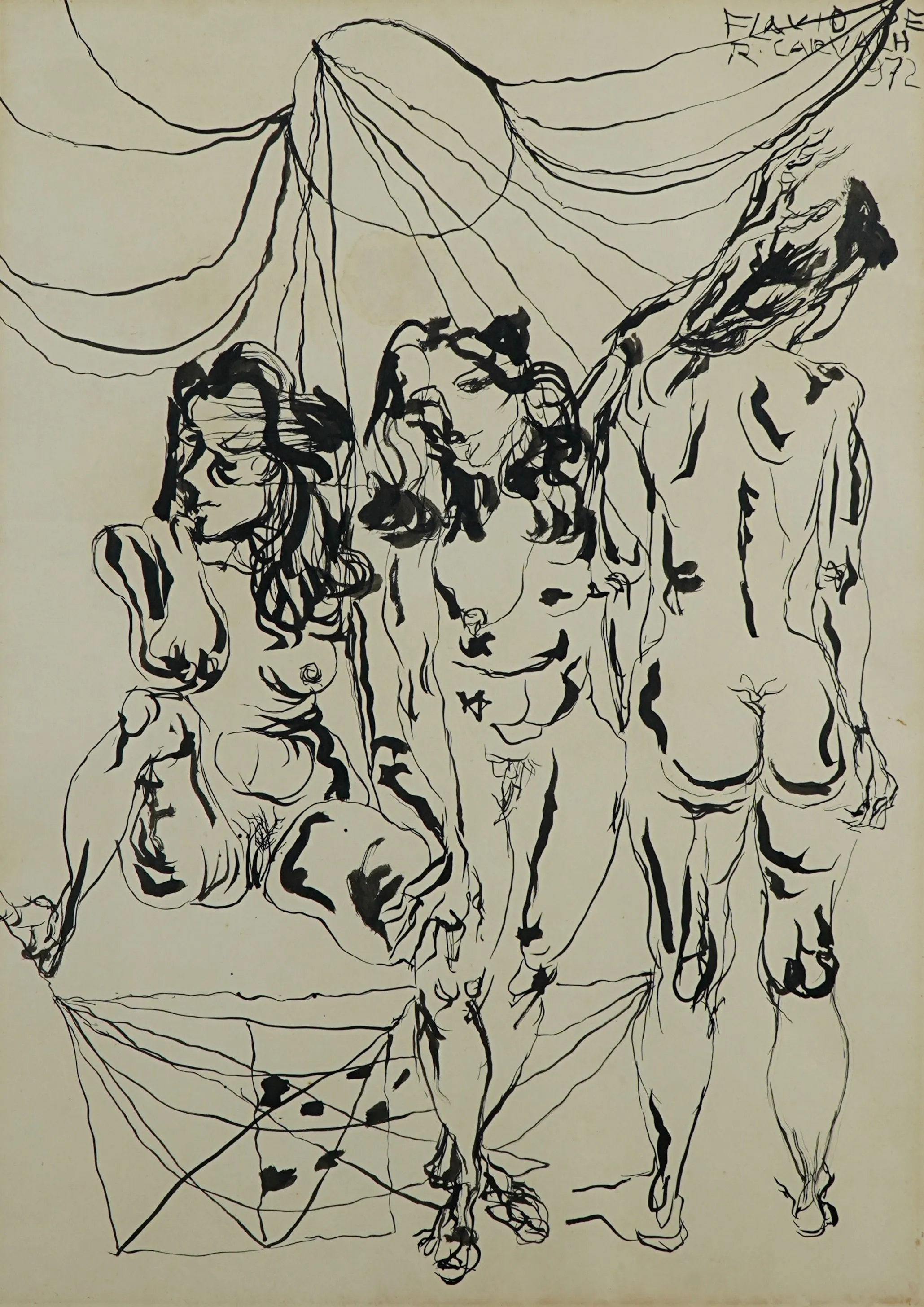
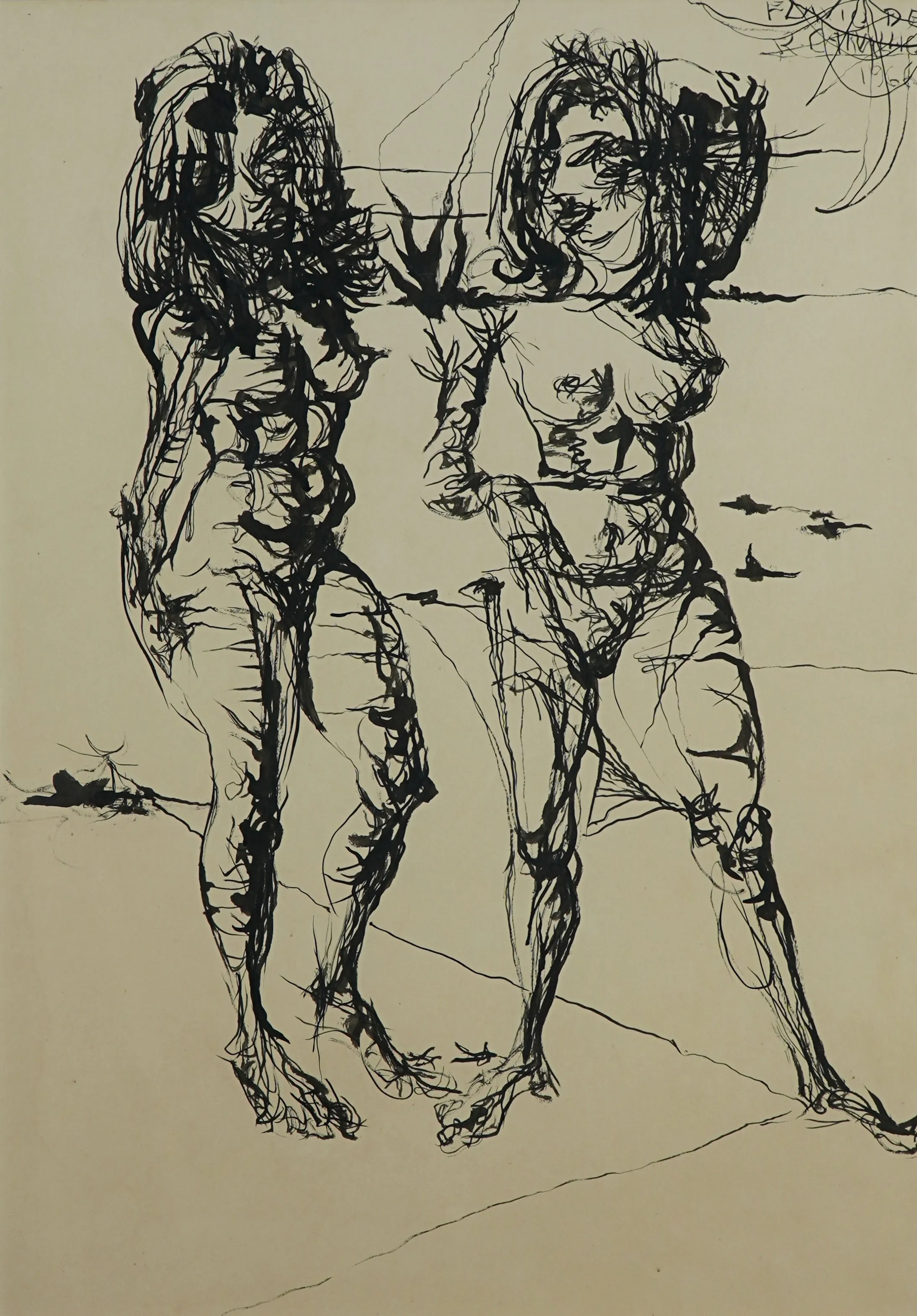
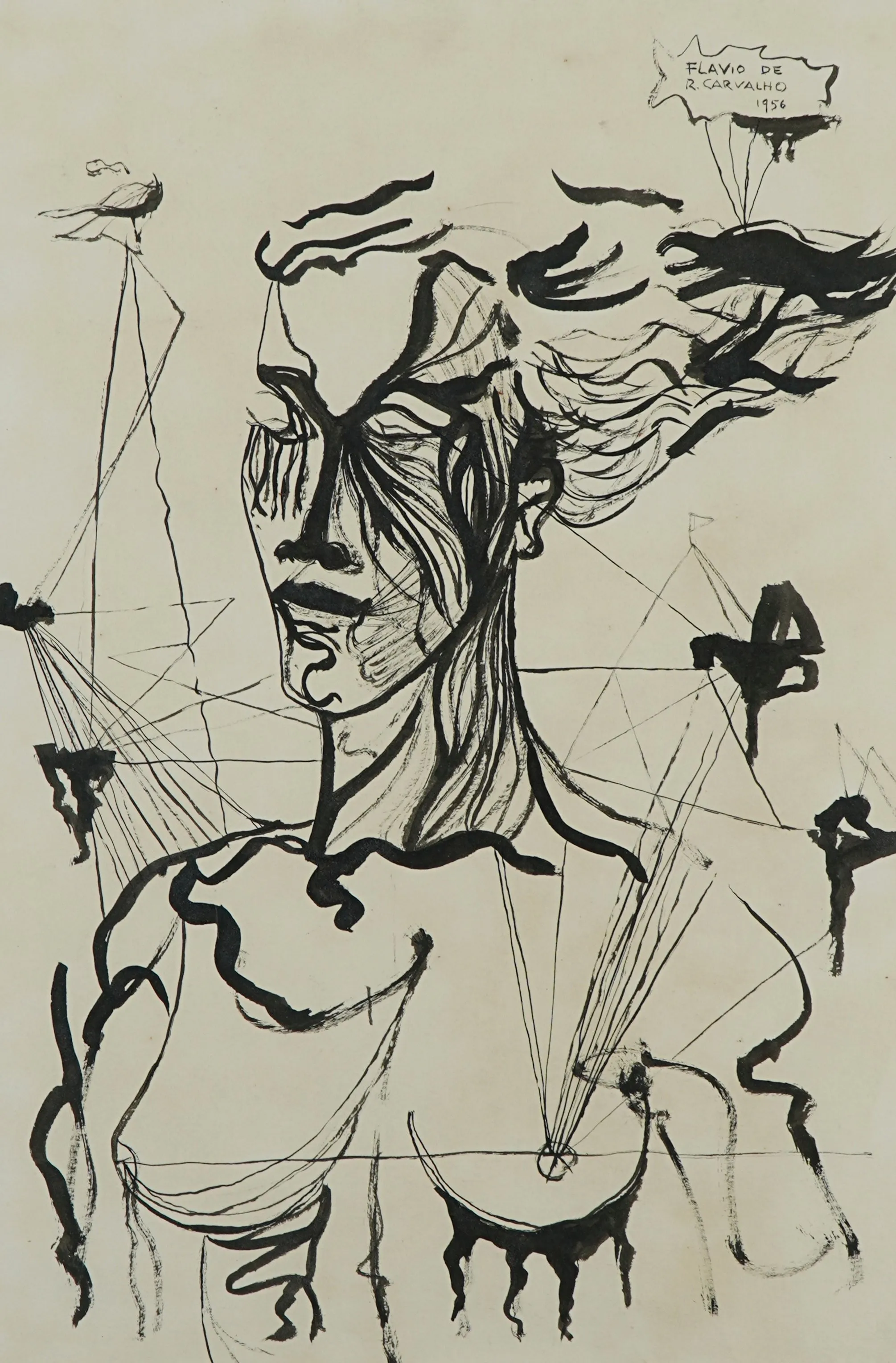
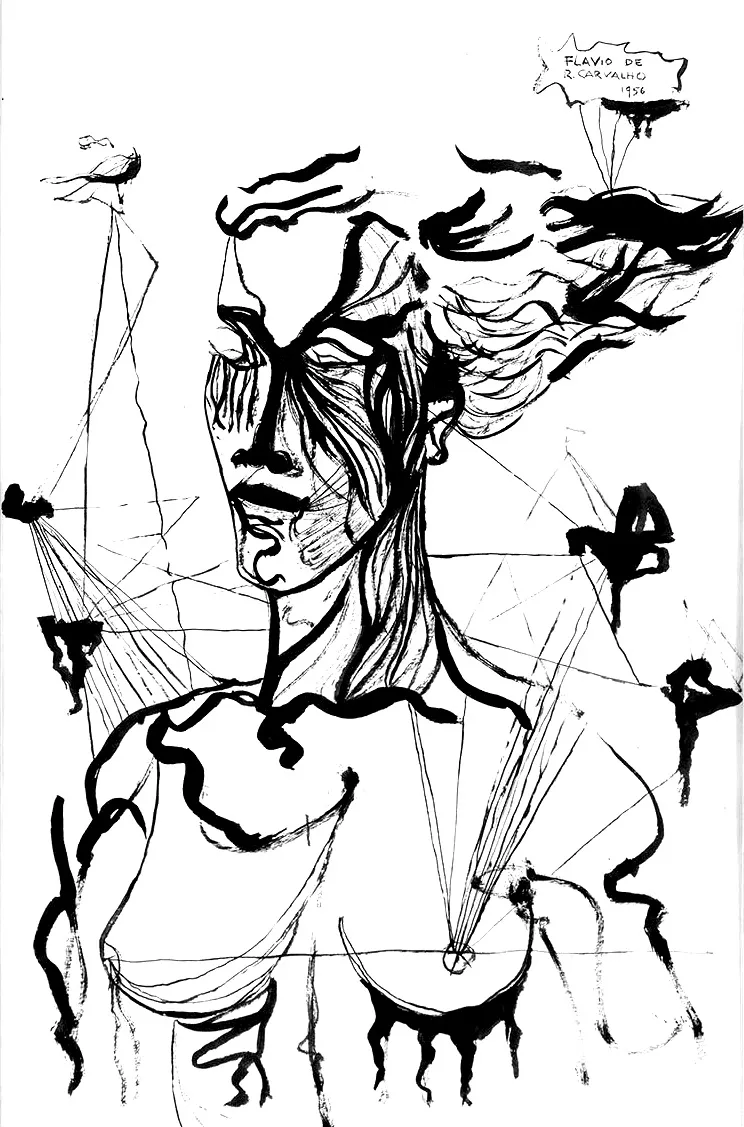
In the 1950s and 1960s, he explored female nudes and incorporated new materials, like phosphorescent paint, blending expressionism with surrealist elements.
Flávio de Carvalho is remembered as a bold cultural figure and visionary, regarded as a precursor of the multimedia artist in Brazil.
Sources:
Text: Blombô research and curation, with the support of artificial intelligence for content writing and structuring.
Check the selection of works of this artist