
Emeric Marcier
- 1916 - 1990
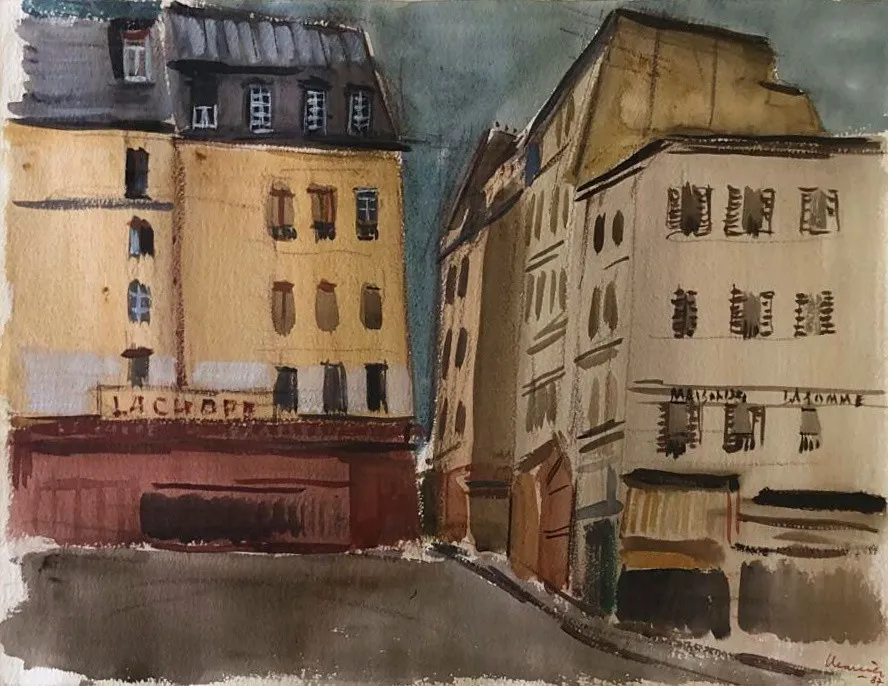
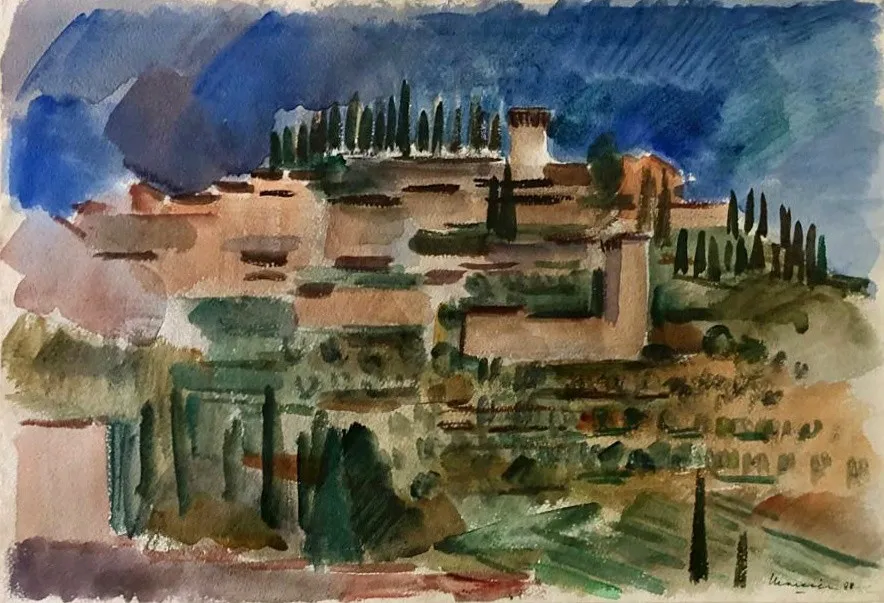
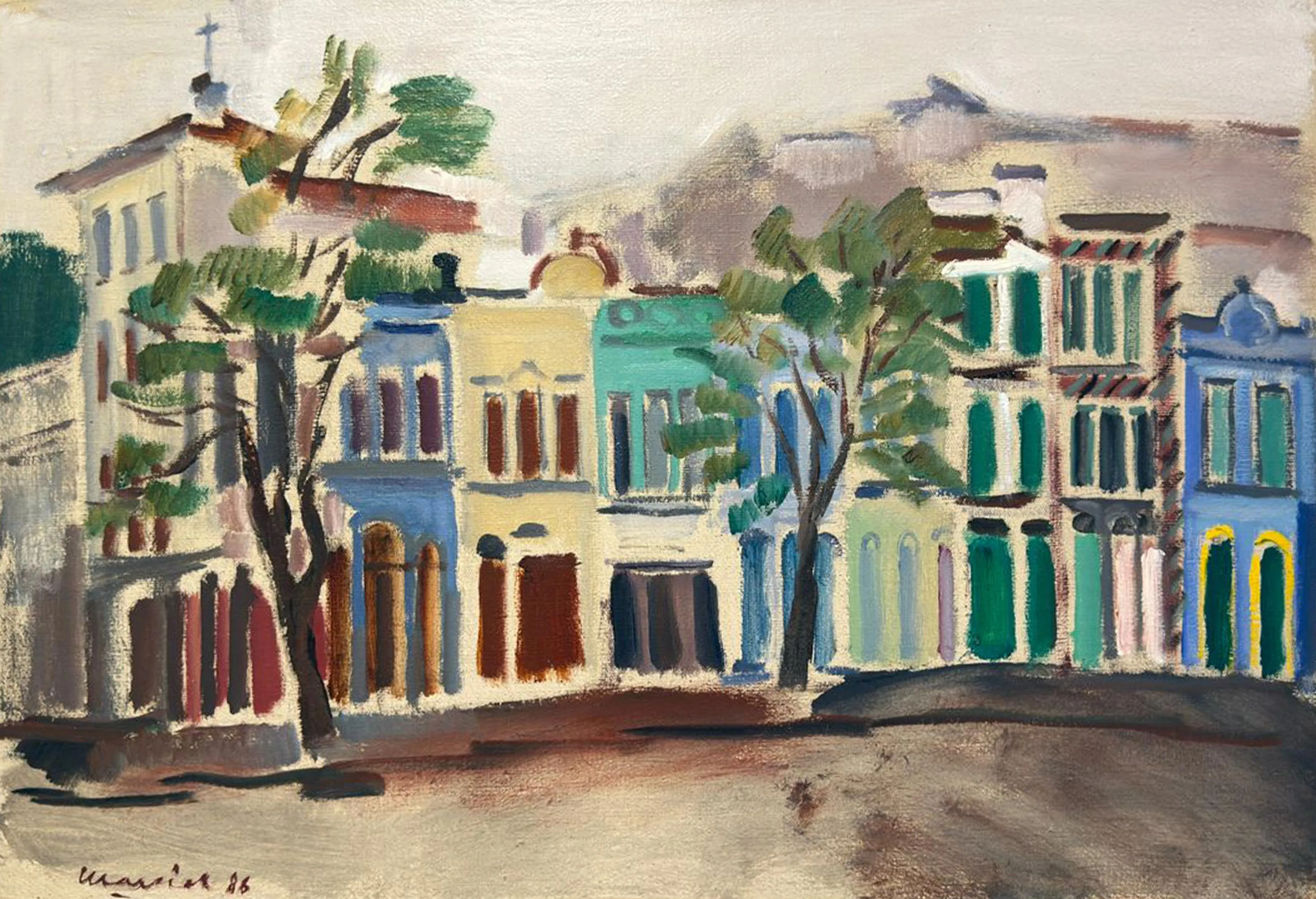
Emeric Marcier (Cluj, Romania, 1916 – Paris, France, 1990) was one of the most important modern Brazilian painters, widely recognized for his landscapes, portraits, and religious-themed works. He also became known for his large-scale mural paintings.
At the age of 20, he left Romania to study at the Brera Academy of Fine Arts in Milan, where he graduated with a thesis on Picasso. In early 1939, with the rise of fascism in Italy, Marcier, who was of Jewish origin, moved to Paris. There, he rented a studio at the Cité Falguière, previously occupied by his friend Victor Brauner. During this period, his work was strongly influenced by Surrealism, and he maintained close relationships with several Romanian and Hungarian surrealist artists, including Victor Brauner, Jacques Hérold, Arpad Szenes, and Maria Helena Vieira da Silva. In Paris, he also attended sculpture classes at the École Nationale Supérieure des Beaux-Arts.
With the advance of World War II in France, Marcier moved to Lisbon at the end of 1939, where he stayed at the home of Arpad Szenes and Vieira da Silva, who were already living in Portugal. In Lisbon, he worked in the studio of the surrealist painter António Dacosta. He became involved with Portuguese writers and intellectuals and collaborated with the literary magazine Presença, an important publication within Portuguese intellectual circles at the time.
In 1940, due to the instability in Europe, he emigrated to Brazil. He arrived in Rio de Janeiro carrying letters of introduction addressed to Mário de Andrade, José Lins do Rego, and Candido Portinari. Through José Lins do Rego, he became acquainted with Murilo Mendes, Lucio Cardoso, and Jorge de Lima, who remained lifelong friends.
Still in 1940, Marcier held his first solo exhibition at the traditional Palace Hotel Salon, occupying a vacancy left by Guignard. The exhibition received highly favorable reviews, highlighting the talent of the young European surrealist artist. Two years later, he presented a major exhibition at the National Museum of Fine Arts.
In 1942, Marcier was invited by O Cruzeiro magazine to travel through the historic towns of Minas Gerais in order to illustrate a landmark publication featuring texts by Carlos Drummond de Andrade, Abgar Renault, Aires da Matta Machado, among others. Deeply impacted by the Minas Gerais Baroque tradition, this journey marked the beginning of the landscape paintings that would define much of his work for the rest of his life. From then on, he portrayed Brazil, its people, and its customs. As a traveling painter, he depicted landscapes from various regions of Brazil and Europe.
Throughout his career, in addition to landscapes and portraits, Marcier distinguished himself through religious paintings and monumental murals, many executed in fresco technique. In 1946, he painted the frescoes for the Cristo Rei Chapel in Mauá, São Paulo.
Marcier initially lived in Santa Teresa, Rio de Janeiro. In 1948, he settled at the Sant’Ana estate in Barbacena, Minas Gerais, where, in his studio, he created important large-scale sacred paintings. During the 1970s, he spent most of his time in Ipanema, Rio de Janeiro, while also living for long periods in Paris, never severing his connection with his estate in Barbacena.
His works are held in major Brazilian museums, and he participated in numerous solo and group exhibitions in Brazil, France, Romania, the United States, Japan, Italy, among other countries. He took part in the Second and Third São Paulo Biennials, as well as the Salzburg Biennial of Sacred Art.
Marcier also left behind a memoir titled Deported to Life (Deportado Para a Vida), published by Francisco Alves.
Sources:
Text: Blombô research and curation, with the support of artificial intelligence for content writing and structuring.
Check the selection of works of this artist