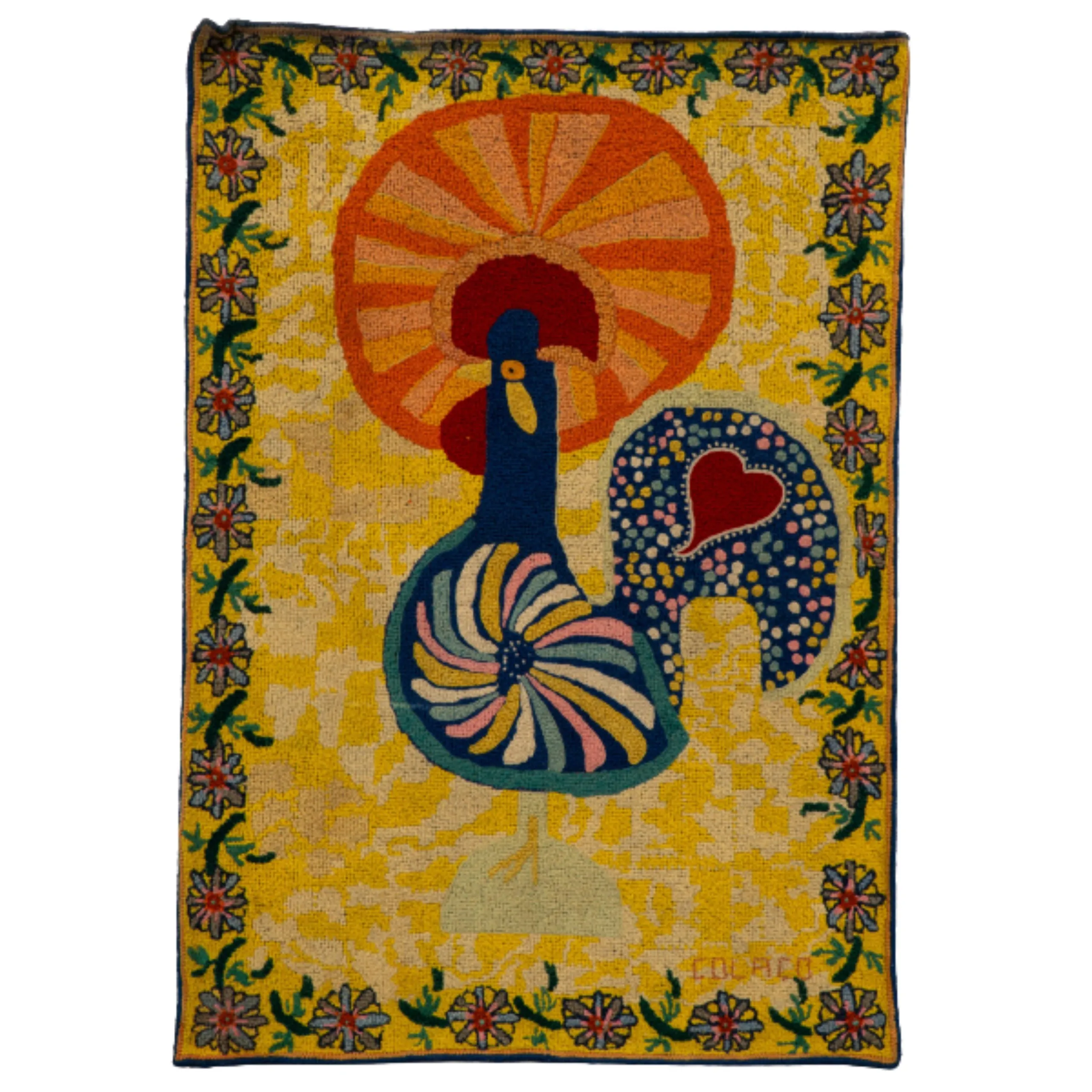

Concessa Colaço
Concessa Colaço (Lisbon, Portugal, 1929) is a Portuguese-born artist who built her career in Brazil, becoming a significant figure in the development of Brazilian tapestry. Daughter of Thomaz Robeiro Colaço, a Portuguese lawyer and poet, and Madeleine Colaço, she grew up surrounded by textile work. Her family moved to Brazil in 1940, settling in Maricá (RJ), where Madeleine created what would be known as the “Brazilian stitch,” considered the first tapestry technique developed in the country.
Concessa began working with tapestry in the late 1960s, expanding her mother’s workshop and developing her own artistic approach. Drawing inspiration from medieval tapestries—particularly those connected to Queen Matilda of France—she created the “corrido” stitch, which became distinctive in her work. Her pieces are crafted exclusively with natural wool and silk, avoiding any synthetic materials.
Her oeuvre gained recognition nationally and internationally and has been acquired by notable collectors, including Queen Fabiola of Belgium and socialite Lourdes Catão. Some of her tapestries are also part of the decorative collection at the Palácio da Alvorada, the official residence of the President of Brazil.
Parallel to her textile practice, Concessa also ventured briefly into music: she composed the samba “A Verdade da Vida,” recorded by the renowned singer Elizeth Cardoso.
Sources:
Text: Blombô research and curation, with the support of artificial intelligence for content writing and structuring.
Check the selection of works of this artist