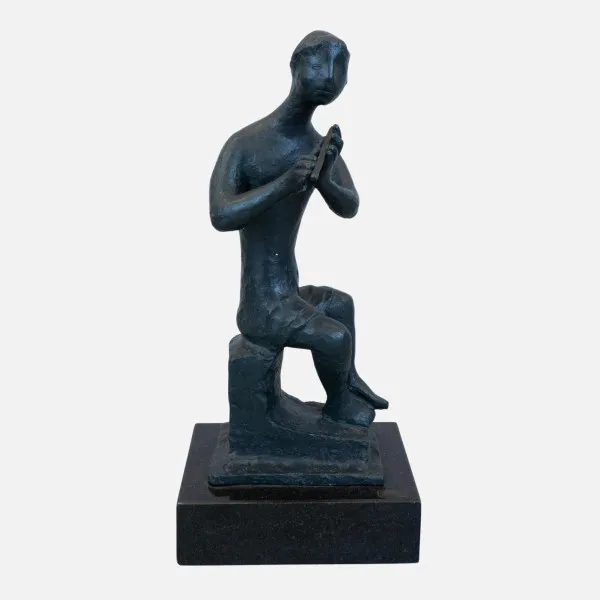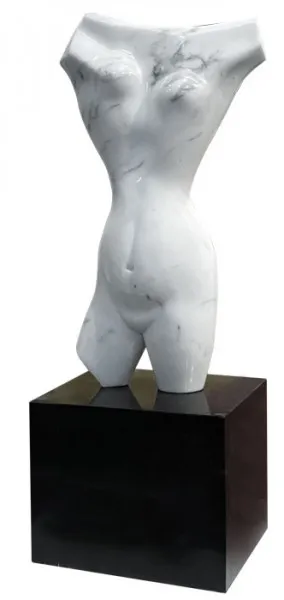

Bruno Giorgi
Brazil - 1905
Bruno Giorgi (Mococa, São Paulo, 1905 – Rio de Janeiro, Rio de Janeiro, 1993) was a renowned Brazilian sculptor whose artistic and political journey crossed borders. In 1913, he moved with his family to Rome, Italy, where he began studying drawing and sculpture under Professor Loss. During the 1930s, Giorgi became involved in antifascist movements, leading to his imprisonment in 1931 and a seven-year sentence. Thanks to the intervention of the Brazilian ambassador in Italy, he was extradited to Brazil in 1935.
Back in São Paulo, Giorgi connected with artists such as Joaquim Figueira and Alfredo Volpi. In 1937, he traveled to Paris, where he attended the La Grande Chaumière and Ranson academies, studying under the renowned sculptor Aristide Maillol. Upon returning to Brazil in 1939, he settled in São Paulo, mingling with iconic figures like Mário de Andrade, Lasar Segall, Oswald de Andrade, and Sérgio Milliet. During this period, he joined the Família Artística Paulista (FAP) and practiced life drawing and painting with the Santa Helena Group.
In 1943, Giorgi moved to Rio de Janeiro, where, at the invitation of Minister Gustavo Capanema, he established a studio in the former Praia Vermelha Asylum. There, he mentored young talents such as Francisco Stockinger. Giorgi gained widespread recognition for his public works, including Monumento à Juventude Brasileira (1947) in the gardens of the current Palácio Gustavo Capanema in Rio de Janeiro; Os Candangos (1960) in the Praça dos Três Poderes; Meteoro (1967) in the lake of the Ministry of Foreign Affairs in Brasília; and Integração (1989) at the Memorial da América Latina in São Paulo. His work reflects a legacy of innovation and a dialogue between art and public spaces.
Sources:
Photo: https://www.guiadasartes.com.br/bruno-giorgi/obras-e-biografia
Text: Blombô research and curation, with the support of artificial intelligence for content writing and structuring.
Check the selection of works of this artist