Antônio Poteiro
Portugal - 1925 - 2010
Antonio Batista de Souza (Santa Cristina da Pousa, Braga, Portugal, 1925 – Goiânia, Goiás, Brazil, 2010) was a painter and ceramist recognized as one of the most prominent figures in Brazilian naïf art. His work is characterized by a profusion of characters and ornamental details, exploring sacred and secular themes with a unique style that blends biblical, folkloric, everyday, and imaginary elements.
He lived in Santa Cristina da Pousa until early childhood, moving to Brazil with his family. Coming from a family of artisans, he lost his mother at the age of eight, left home at sixteen, and lived in various cities, including Uberlândia (MG) and Bananal Island (TO), before settling in Goiânia (GO). He worked as a cistern builder, baker, cook, and cleaner before he started making clay pots. His experience in utilitarian ceramics helped him gain knowledge of materials and techniques, which he later applied to his sculptures. His initial attempts at creating figurative images were challenging, but his connection with researcher Regina Lacerda (1921-1992), who encouraged him to sign his works and purchased them for museum collections, brought greater recognition to his art. In the 1970s, with the support of artists Siron Franco (1947) and Cleber Gouvêa (1942-2000), Poteiro also began painting, gaining wider appreciation across Brazil.
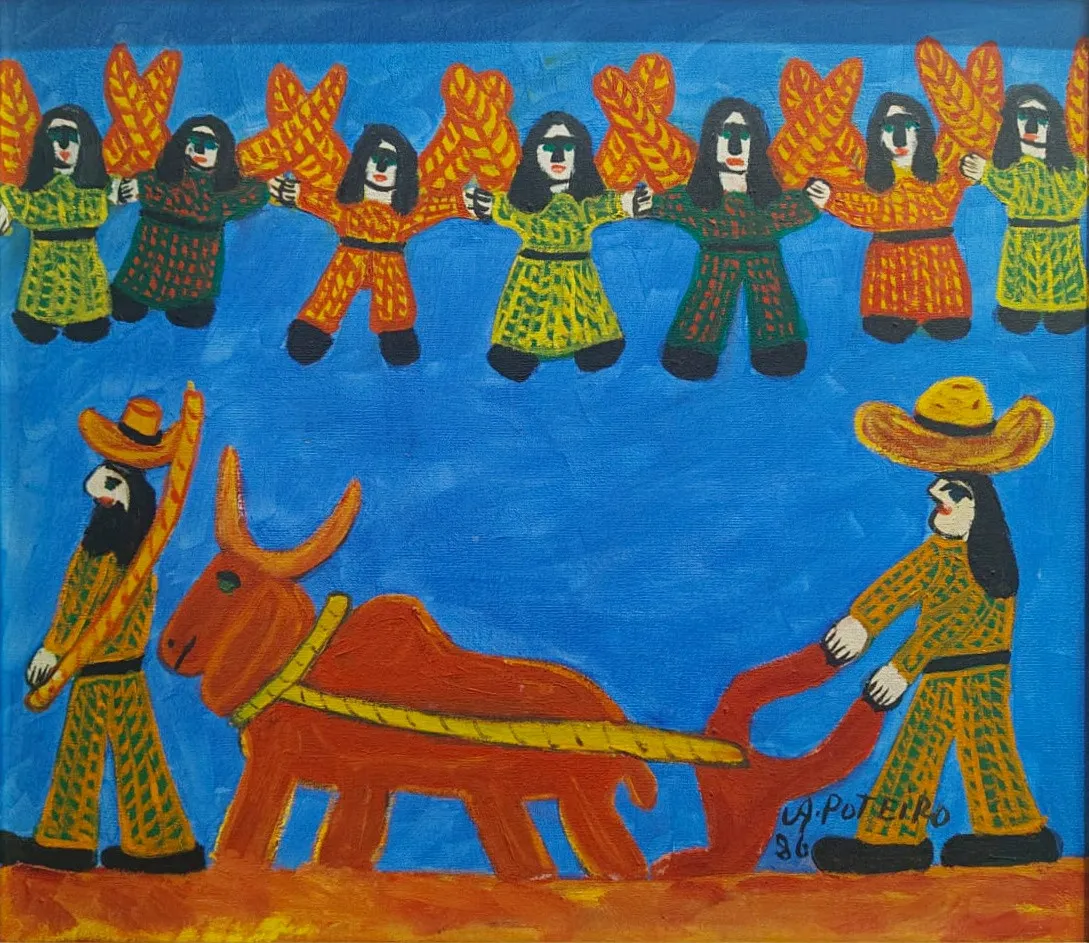
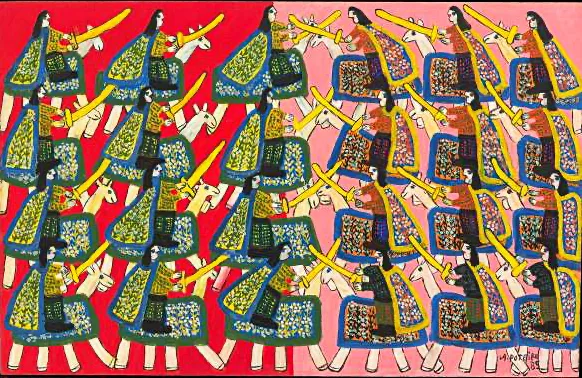
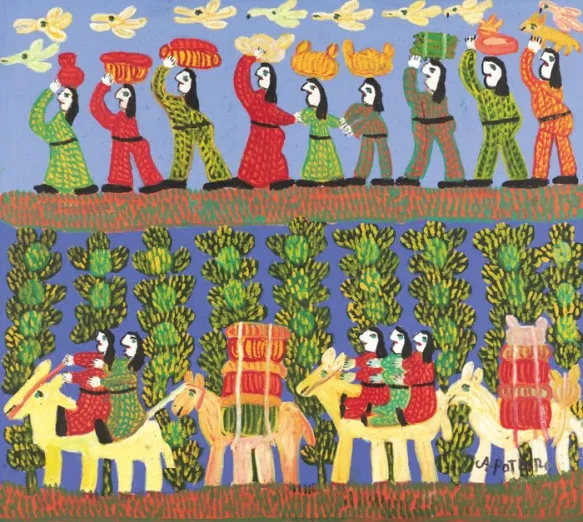
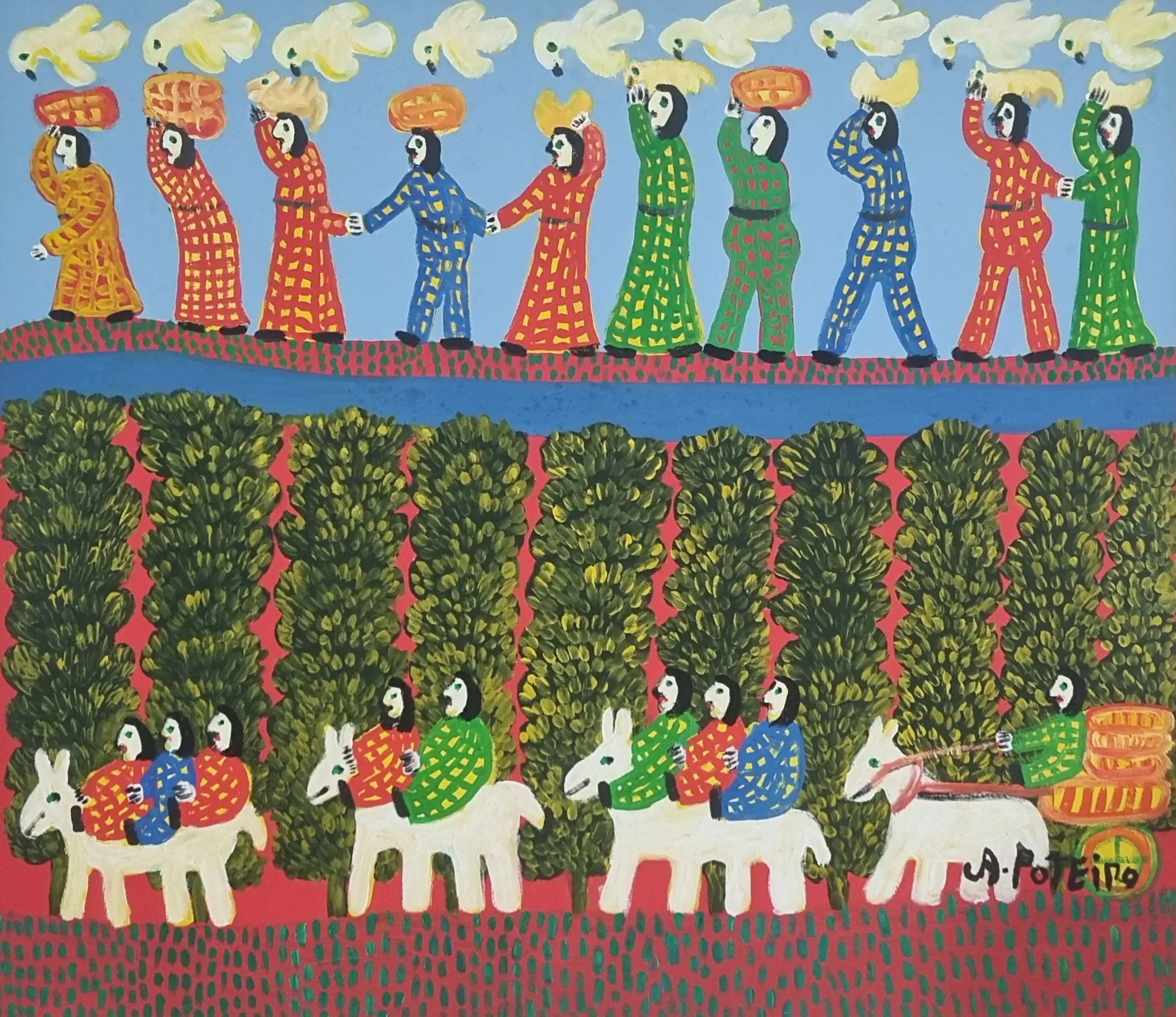
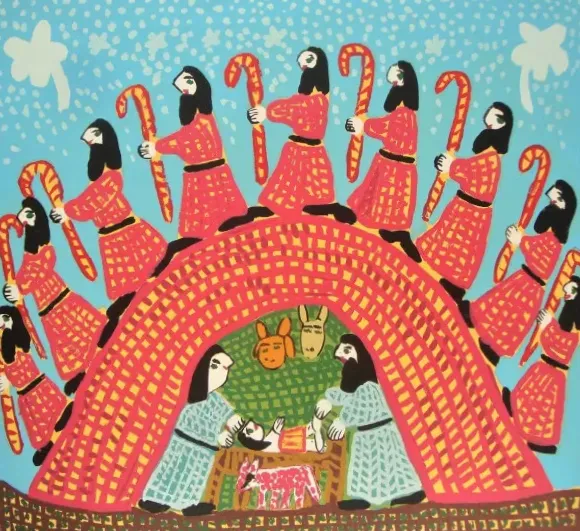
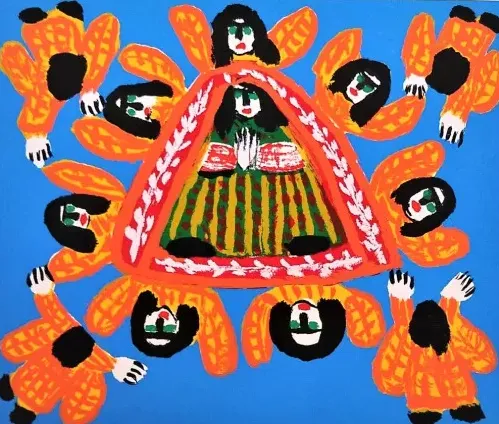
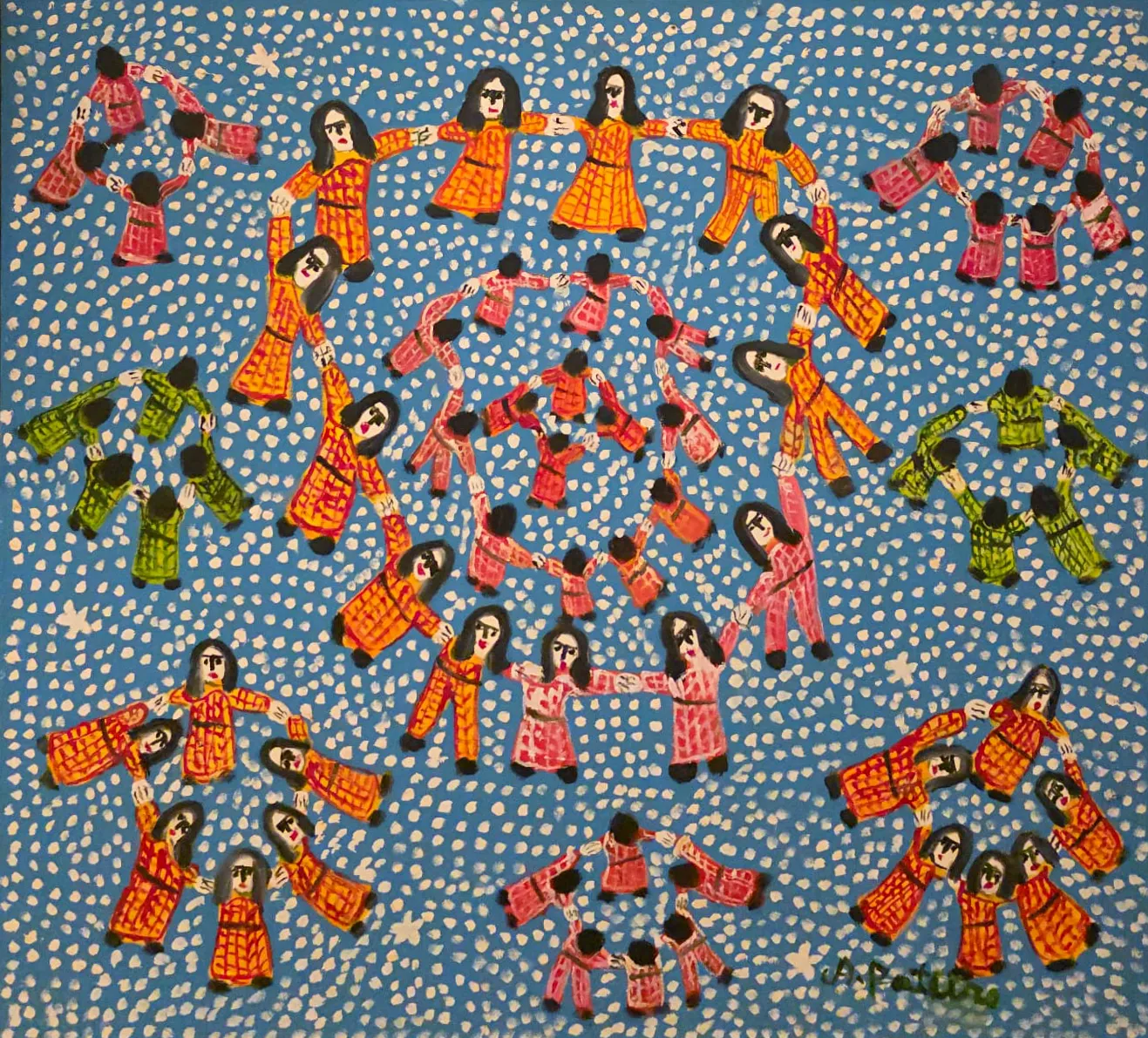
Poteiro’s themes, both in ceramics and paintings, reflect popular imagination, religious devotion, and local daily life. His works portray festivities like the Cavalhada of Pirenópolis and the Festa do Divino, biblical stories such as Adam and Eve and the Three Kings, as well as depictions of saints, demons, circus scenes, childhood games, and soccer matches. His work often addresses mystical and social themes in a playful manner, with a visual language that defies classical and modern art conventions. His works are highly narrative, with detailed scenes and a baroque aesthetic.
His ceramic sculptures are notable for their textured surfaces, featuring figures and scenes in densely populated circular structures. In A Ecologia, for instance, a circle of indigenous figures at the base is followed by another row of characters, with a bird symbolically perched on top. As noted by critic Frederico Morais (1936), the accumulation of figures evokes the tympana of Romanesque and Gothic churches.
Poteiro also created individual figures, especially depictions of saints and divine images such as Deus-balança, Deus-tartaruga, and Deus-amor. These figures have a rustic look, with caricatured expressions and relief carving. In Nossa Senhora Karajá, he sculpted the Virgin Mary with a body and turban made of leaves, holding a child and surrounded by children in a circle. Starting in the mid-1970s, he began painting some of his ceramics, as seen in Jesus and the Saints (1976).
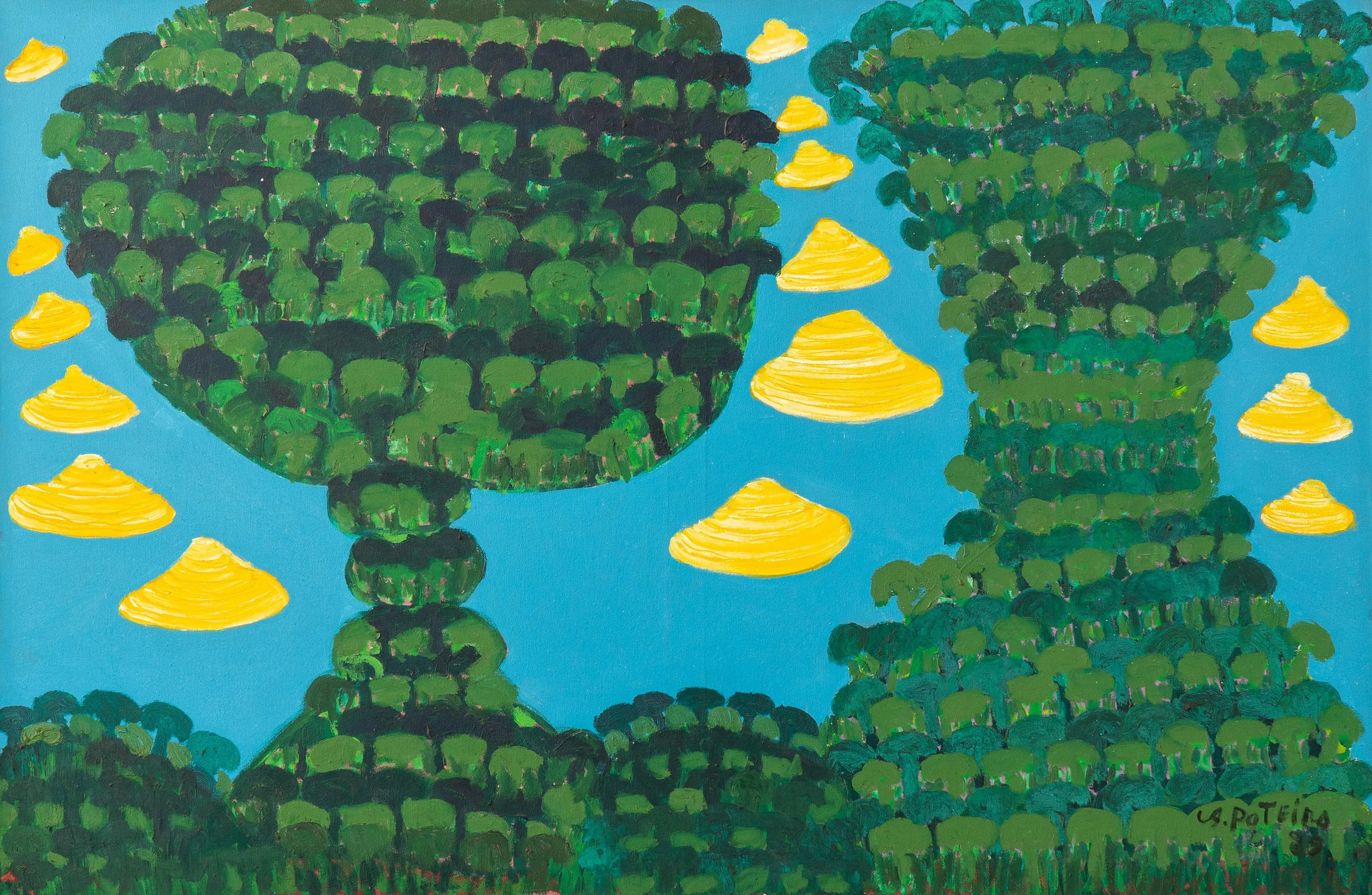
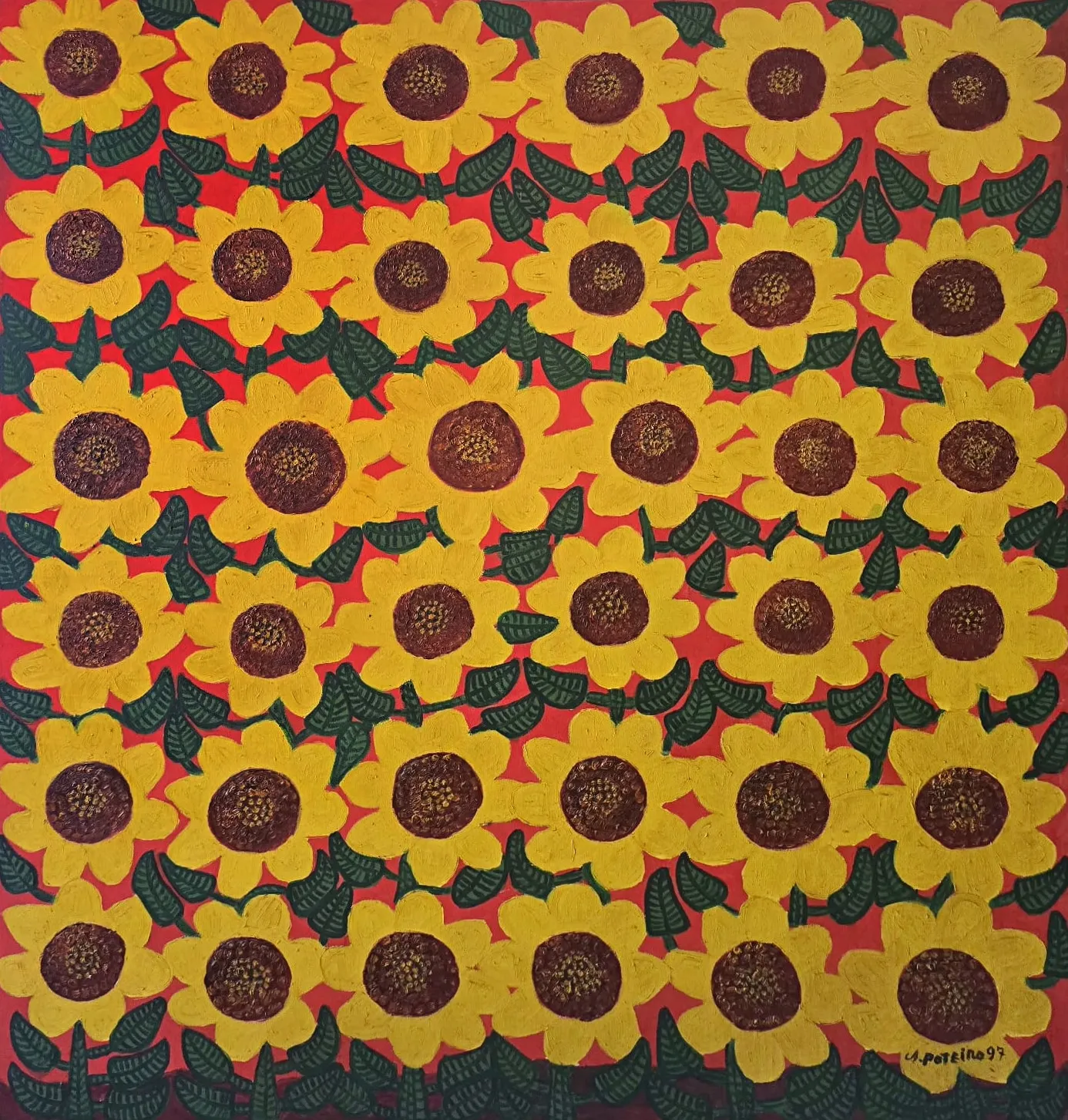
In his paintings, Poteiro avoided perspective, emphasizing flatness. He painted with both hands, starting with a background color and then arranging characters and objects before adding details. Although his technique was intuitive, his compositions are symmetrically arranged and meticulously planned, with repeated figures in horizontal or circular layouts.
In A Semana Santa em Goiás (1980), Poteiro divided the canvas into three sections, presenting distinct scenes: the Procissão do Fogaréu, the birth of Jesus, and the flight to Egypt, all symmetrically arranged to reinforce narrative cohesion.
Celebrated as one of Brazil's most unique artists, Poteiro held numerous solo exhibitions, and his work is part of notable public and private collections. Without formal ties to any art school or tradition, he developed a unique language, reinterpreting religious, folkloric, and imaginary themes and marking Goiás art with his richly detailed ceramics and paintings.
Sources:
Text: Blombô research and curation, with the support of artificial intelligence for content writing and structuring.
Check the selection of works of this artist