
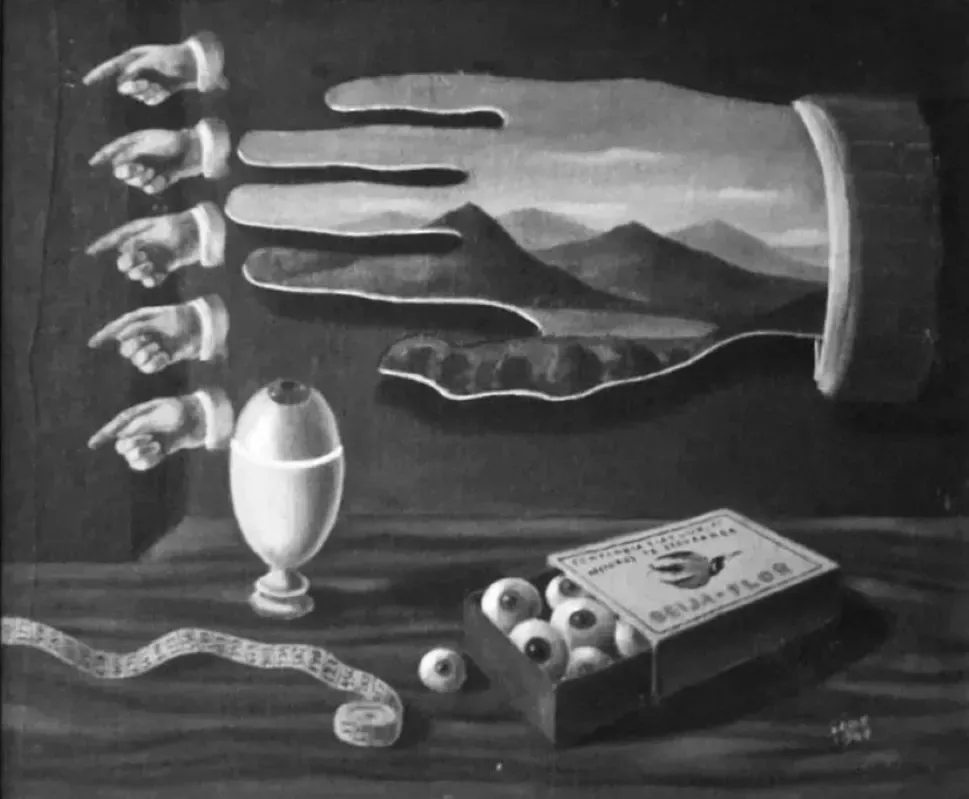
Walter Lewy
Walter Lewy (Bad Oldesloe, Germany, 1905 - São Paulo, SP, 1995) was a German-Brazilian printmaker, painter, illustrator, landscaper, draftsman, and advertiser. He studied at the School of Arts and Crafts in Dortmund, Germany, from 1923 to 1927, during which he aligned with the magic realism trend. In 1928, he participated in group exhibitions in various German cities, including Dortmund, Gelsenkirchen, and Boclusim.
With the economic crisis of 1929, Lewy lost his job as a draftsman at a printing company and moved to the countryside to live with his parents, working as a newspaper joke illustrator. His first solo exhibition took place in Bad Lippspringe in 1932, but it was closed when the German Art Chamber banned Jews from participating in the arts. To escape this oppressive situation, Lewy immigrated to Brazil in 1938, resuming his professional painting career. Unfortunately, he left behind hundreds of works that were sent to the Netherlands and lost during the bombings of World War II.
In Brazil, Lewy settled in São Paulo, where he initially worked in advertising drawing and later created book covers and illustrations for various publishers. He illustrated works by renowned authors such as Bertrand Russell, Machado de Assis, and Arnold Toynbee. Later, Lewy worked as a layout artist, letterer, and finalizer at advertising agencies such as De Carli, Lintas Publicidade, Martinelli, Santos & Santos, and Thompson Propaganda.
Lewy left a significant legacy in Brazilian art, combining his skills in various artistic disciplines and contributing to the country's literature and advertising fields.
Sources:
Text: Blombô research and curation, with the support of artificial intelligence for content writing and structuring.
Check the selection of works of this artist
Soon, products will be available in the selection!
